




From pv magazine Germany
A research project led by Germany Fraunhofer Institute for Solar Energy Systems ISE (Fraunhofer ISE) has demonstrated that integrating photovoltaics into vehicle roofs, hoods and side panels – a concept known as vehicle-integrated photovoltaics (VIPV) – could significantly reduce pressure on power grids.
The researchers found that passenger cars in Central Europe could generate up to 55% of their annual electricity demand through onboard solar generation, assuming relatively low annual mileage and large roof surfaces, such as those found on SUVs. In Southern Europe, the share could rise to 80%. The approach could reduce charging costs and decrease the need for external charging.
“The study analyzed data from 23 different vehicle types – ranging from compact city cars to heavy-duty trucks – and combined detailed vehicle and driving profiles with Meteosat satellite data, as well as meteorological data from Amsterdam and Madrid,” said Christian Braun, scientist and project staff member at Fraunhofer ISE. “To achieve this, the vehicles were equipped with sensors, and measurement data covering 1.3 million kilometers driven was evaluated.”
Using simulation models, the research team estimated that electricity demand from the European grid could decline by 15.6 TWh by 2030 if all new vehicles sold between 2024 and 2030 were equipped with VIPV systems.
“Electrification alone is not enough. We need innovations that structurally reduce energy demand. VIPV makes a contribution precisely in this area,” said Lenneke Slooff-Hoek, Solarmoves project manager at TNO.
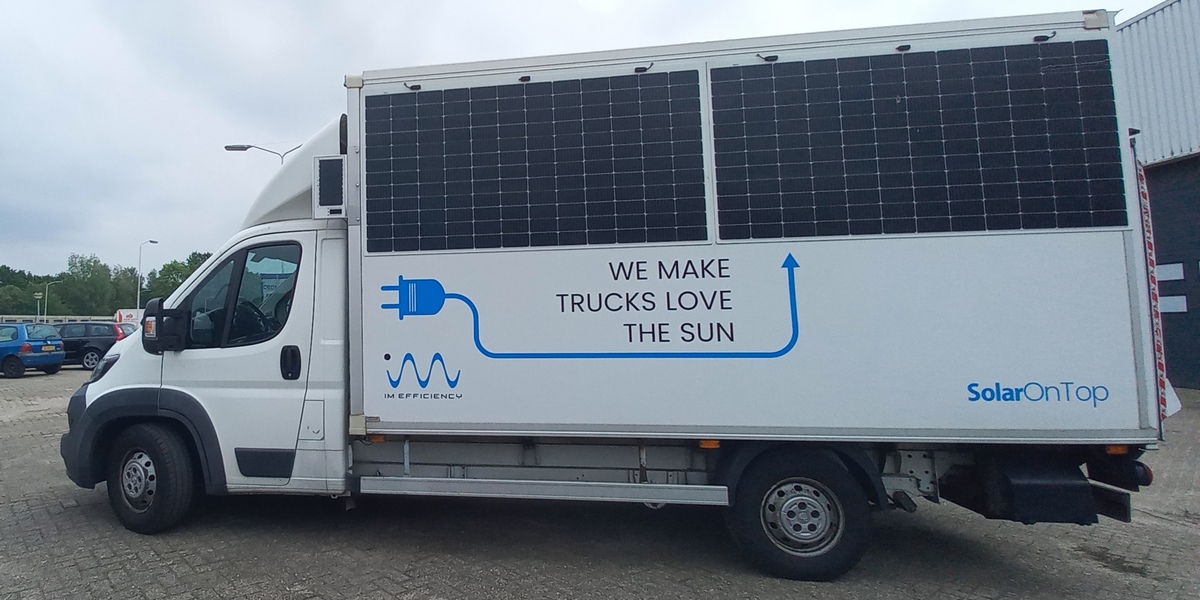
The researchers said the logistics sector could benefit most from the technology, as vans, trucks and trailers combine large roof areas with high electricity demand for cooling, heating and auxiliary systems. According to the project findings, VIPV can extend the daily driving range of electric trucks by up to 15%.
The study found that truck trailers equipped with rooftop PV can generate up to 55 kWh per day during summer months. If solar modules are also integrated into the side walls, daily yields could increase to between 90 kWh and 110 kWh, enough to fully power cooling or hydraulic systems.
The researchers also said VIPV could reduce diesel consumption in conventional trucks by supplying power for air conditioning, heating and auxiliary systems. According to the project team, the resulting fuel savings could allow VIPV investments to pay back in less than two years.
Fraunhofer ISE has conducted the research project in partnership with Netherlands' TNO, Sono Motors, IM Efficiency and Lightyear, under a mandate from the European Commission.
This content is protected by copyright and may not be reused. If you want to cooperate with us and would like to reuse some of our content, please contact: editors@pv-magazine.com.


By submitting this form you agree to pv magazine using your data for the purposes of publishing your comment.
Your personal data will only be disclosed or otherwise transmitted to third parties for the purposes of spam filtering or if this is necessary for technical maintenance of the website. Any other transfer to third parties will not take place unless this is justified on the basis of applicable data protection regulations or if pv magazine is legally obliged to do so.
You may revoke this consent at any time with effect for the future, in which case your personal data will be deleted immediately. Otherwise, your data will be deleted if pv magazine has processed your request or the purpose of data storage is fulfilled.
Further information on data privacy can be found in our Data Protection Policy.