
Japan’s Aomori prefecture sets capacity tax on large wind, solar
Japan’s Aomori prefecture is introducing a capacity-based levy on large onshore wind and solar projects, using zoning criteria to align renewable expansion with environmental, historical, and cultural priorities.

Japan launches R&D call for tandem perovskite solar cell mass production
Japan’s New Energy and Industrial Technology Development Organization (NEDO) is accepting proposals for a six-year R&D program to advance large-scale manufacturing technologies and field testing of next-generation tandem perovskite solar cells.
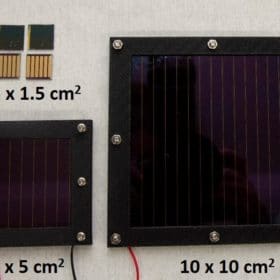
Japan launches subsidies to accelerate perovskite solar deployment
The Japanese government has launched applications for two targeted funding schemes to accelerate deployment of lightweight perovskite solar tech and incentivize battery-backed systems that enhance grid resilience and economic viability.

US steel crunch puts solar deployment plans at risk
With US domestic steel mills booked solid through 2025, a sudden doubling of tariffs on imported steel has created a critical bottleneck for American industries. The move, which hits specialized Indian steel particularly hard, is now delaying projects for builders and renewable energy developers who rely on steady, affordable supply.

NEDO outlines R&D concepts to expand solar adoption in Japan
Japan’s New Energy and Industrial Technology Development Organization (NEDO) has launched a 2025–29 project with 24 themes to advance the development of next-generation solar cells, site-specific systems, grid stability, and recycling in line with its carbon neutrality goal.

Azerbaijan, Chinese PV firm plan export-focused solar factory in free zone
Azerbaijan and Chinese solar manufacturer Sichuan Sunsync have revealed plans to build a solar panel factory in the Alat Free Economic Zone, south of Baku.

Japan to launch platform linking aggregators with FIP operators
Japan plans to launch an online platform by September 2025 linking aggregators with feed-in premium (FIP) operators to support grid integration, streamline solar battery installations, and improve planning and forecasting for renewable projects.

Sumitomo Heavy unveils reactive plasma tech for thin-film perovskite PV
Sumitomo Heavy Industries (SHI) has developed a new reactive plasma deposition (RPD) method to form ultra-thin tin oxide electron transport layers (ETL) for perovskite solar cells. It claims this enables low-temperature mass production with minimal substrate damage.

California farmers expand revenue with vertical solar, strawberries
California farmers face mounting economic pressures, including high electricity prices. Do agrivoltaics offer a solution?

Activ8 Energies acquires Low Carbon Energy to expand UK solar portfolio
Activ8 Energies, 50% owned by SSE Airtricity, has acquired all shares of UK-based Low Carbon Energy (LCE) to strengthen its commercial and industrial (C&I) solar portfolio in the United Kingdom.
