Emiliano Bellini

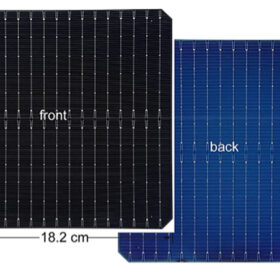
Discovery of passivating pinholes in TOPCon solar cells paves the way for higher efficiencies
DAS Solar and Hebei University have identified two types of pinholes in TOPCon solar cells: harmful recombinational pinholes, which lack oxygen and cause carrier recombination, and beneficial passivating pinholes, which retain oxygen to enable efficient tunneling while maintaining interface passivation. Their work shows that optimizing oxide layer formation, back-surface polishing, and polycrystalline silicon deposition can increase passivating pinholes, boosting device efficiency and guiding industrial cell design.
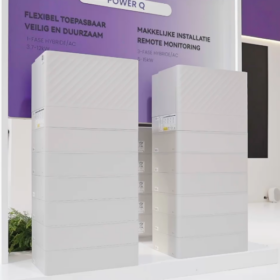
Fox ESS presents residential storage system line with 89.6% round-trip efficiency
The new series features single- and three-phase systems with scalable LFP battery integration. Designed for rapid whole-house backup and VPP applications, the new product delivers up to 89.6 % round-trip efficiency, according to the manufacturer.

DMEGC launches 475 W full-black solar module
The Chinese manufacturer said its new rooftop solar module offers 455–475 W power, 22.8–23.8% efficiency, 96-cell double-glass design, and IP68 protection.
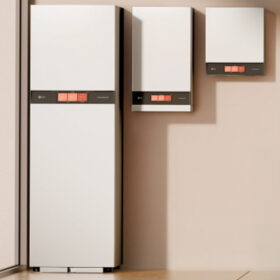
LG debuts new indoor air-to-water heat pumps
The Korean manufacturer has expanded its Therma V R290 heat pump line with three indoor unit options to improve installation flexibility. The new products are designed to deliver heating performance at ambient temperatures as low as -28 C and domestic hot water output of up to 75 C.

Is Switzerland going back contact?
In 2025, back-contact solar modules from Aiko Solar and Longi accounted for more than 50% of the Swiss market, driven by strong demand for high-efficiency rooftop PV systems, according to a new report by Eturnity and the Bern University of Applied Sciences.

New framework promises unprecedented level of cybersecurity for SCADA systems
An international research team developed CyberSentry, a software framework using advanced deep learning and optimization techniques to enhance cybersecurity in SCADA systems for power plants and critical infrastructure. It combines feature selection, hybrid anomaly detection, and dynamic parameter tuning to detect diverse cyberattacks with 99.5% accuracy while minimizing false alarms.
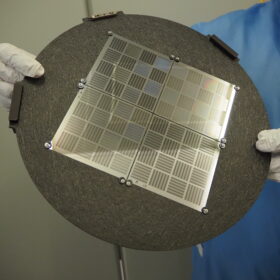
Nanostructured silicon could push solar cells beyond Shockley–Queisser limit
The LEEMONS project is researching nanostructured silicon that uses low-energy electron multiplication (LEEM) to allow one high-energy photon to generate multiple electrons, reducing energy losses in solar cells. By creating ultra-thin amorphous silicon layers inside crystalline silicon via ion implantation, the scientists aim to boost solar cell efficiency beyond the Shockley–Queisser limit while keeping compatibility with existing manufacturing methods.
Chinese PV Industry Brief: Wafer prices fall on weak demand
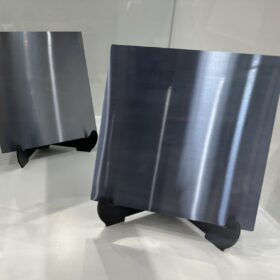
The China Nonferrous Metals Industry Association (CNMIA) says polysilicon and wafer prices continued to fall this week, with n-type re-feed and dense polysilicon down 6.39% and 6.42% to an average of CNY 45,200/ton ($6,240).

Bahrain reveals qualified bidders for 100 MW BAJ Solar IPP project
The Bilaj Al Jazayer Independent Power Project will be developed under a public-private partnership on a build-own-operate basis.
Fire hits PV-equipped sport complex in Gibraltar
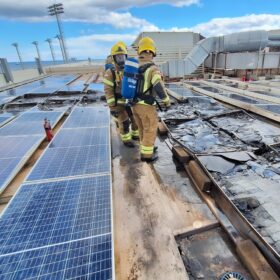
Fire caused by an electrical fault from an overheated arcing cable hit the solar panels at Europa Point Stadium in Gibraltar. Firefighters contained and extinguished the blaze within 20 minutes.
