Emiliano Bellini


JCM Power wins 240 MW hybrid PV-wind project in Pakistan with $0.031/kWh bid
JCM Power has won a 240 MW hybrid wind-solar project in Pakistan with a bid of $0.031/kWh. The facility will be located in Dhabeji, near Karachi, and will supply power to local utility K-Electric.

Fraunhofer ISE claims 31.6% efficiency for perovskite-silicon tandem solar cell
The German research institute said it utilized a hybrid manufacturing route to deposit the perovskite solar on the cell’s top PV device based on an industrially textured silicon heterojunction technology. For the bottom subcell, a standard silicon solar cell was used.
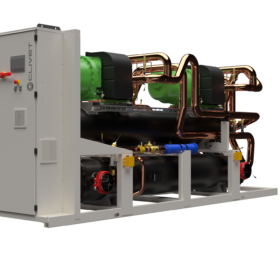
Clivet launches water-cooled multipurpose heat pump
The Italian manufacturer said the its new polyvalent reversible heat pump has a seasonal coefficient of performance of 4.44 to 4.59 and a seasonal energy efficiency ratio of 7.72 to 7.53. It can reportedly achieve a flow temperature of up to 55 C.
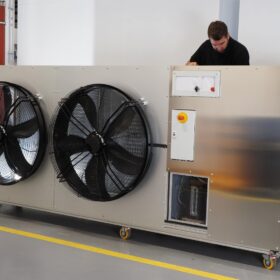
Fraunhofer ISE developing propane heat pumps for multi-family homes
Germany’s Fraunhofer Institute for Solar Energy Systems (Fraunhofer ISE) is developing “easy-to-use and reproducible” propane heat pumps to replace fossil fuel systems in multi-family homes, while exploring modernization options for various residential building types.

Saudi Arabia launches 3 GW solar tender
Saudi Power Procurement Co. (SPPC) has announced a request for qualification (RFQ) for 3 GW of solar across four projects in the sixth round of Saudi Arabia’s renewable energy tender program.

Sharp unveils 610 W TOPCon solar panel with 22.58% efficiency
Sharp’s new IEC61215- and IEC61730-certified solar panels have an operating temperature coefficient of -0.29% per C and a bifaciality factor of over 80%.

Jordan launches rebate scheme for residential PV
The Jordanian government says it will cover up to 30% of the cost of buying and installing residential PV systems through its new rebate scheme.

Italian scientists build 12.6%-efficient nickel oxide-based large-area perovskite solar modules
An Italian research group has fabricated 110 cm² perovskite solar module with an inverted configuration and a hole transport layer that uses nickel oxide instead of commonly utilized poly(triarylamine) (PTAA). The proposed architecture aims to achieve high efficiency that is competitive with PTAA-based panels while improving stability.

Daiwa House unveils solar carport
Daiwa House, Japan’s largest homebuilder, has developed a new carport made from extruded aluminum profiles. It comes in two versions, accommodating either four or two vehicles.

Taiwan improves PPA rules for renewables
The Taiwanese government has introduced a new, favorable framework for renewable-energy power purchase agreements (PPAs). Large energy consumers are no longer required to buy the entire output of large-scale facilities.
