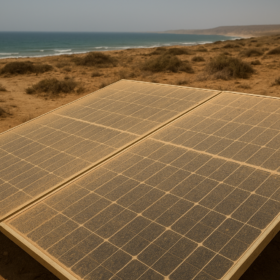
The impact of dust on PV systems in arid coastal environments
A Saudi–Egyptian research team investigated the effects of four types of dust on photovoltaic panels in arid coastal environments, finding that power losses can reach up to 48%.
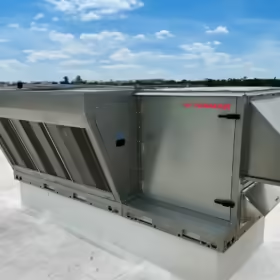
Japanese manufacturer launches dual-fuel commercial rooftop heat pump
Japanese machinery maker Yanmar says its new commercial rooftop units (RTUs) include a standard model, a dual-fuel heat pump, and a dedicated outdoor air system (DOAS) with integrated energy efficiency ratios (IEER) up to 21.3.
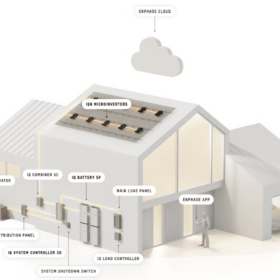
Enphase announces complete off-grid solar-storage system
Enphase Energy has introduced a complete off-grid solar and storage system that integrates batteries, microinverters, and generator control, with international rollout set for 2026.

Schneider Electric unveils 200 kWh C&I battery storage system
Schneider Electric has introduced a modular 200 kWh battery energy storage system for commercial and industrial (C&I) users, scalable up to 2 MWh across 10 units.
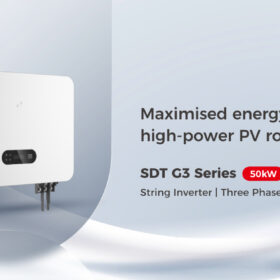
GoodWe unveils 50 kW string inverter for C&I projects in China
Chinese inverter and energy storage specialist GoodWe says its new 50 kW string inverter (C&I) supports up to 180% PV oversizing and operates below 50 decibels at full load.

Baxi unveils high-temperature air source heat pumps
Baxi has introduced its HP60 monobloc air source heat pump series, offering outputs from 4 kW to 13 kW and a seasonal coefficient of performance of up to 5.34.
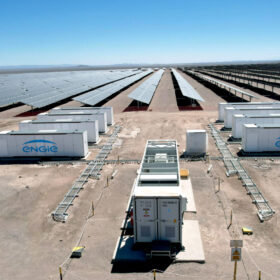
Hybrid PPA model improves PV-BESS bankability, say researchers
Researchers have modeled a hybrid financing scheme combining contracted and merchant components to improve the bankability of PV-battery energy storage system (PV-BESS) assets, using a Bayesian LSTM forecast integrated with a MILP optimization model to assess performance.
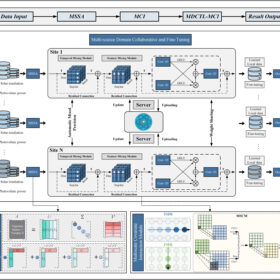
PV power generation forecast technique for solar plants with missing data
Scientists in China have developed a novel missingness-aware power forecasting method that leverages signal decomposition, multi-scale covariate interaction, and multi-domain collaborative transfer learning. The approach reportedly improves average forecasting accuracy by 15.3%.

PV-driven desalination system for brackish water
Algerian researchers have built a single-stage solar and battery desalination system for brackish water that uses a hybrid spotted hyena optimizer and maximum power point tracking (MPPT) algorithm to improve efficiency. Simulations and real-time tests showed high performance, steady water output, and low salinity under changing solar conditions.

Elecnova releases 1 MW/2 MWh ESS for grid-scale use
The Chinese company says its new product is available in a standard container configuration. Its liquid and forced-air cooling systems reportedly maintain a cell temperature difference of just 3 C
