Marija Maisch

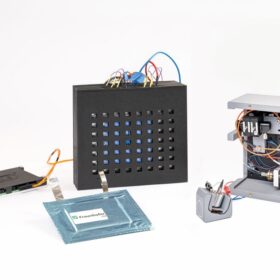
World’s first high-power aluminum-ion battery system for energy storage
For the first time, a complete aluminum-graphite-dual-ion battery system has been built and tested, showing that lithium-free, high-power batteries can deliver stability, fast response, and recyclability for next-generation grid applications.
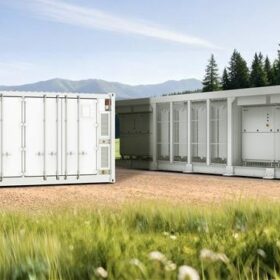
Trina Storage launches AC-coupled battery for utility-scale applications
Offered primarily as a 10 MW unit, the new product is also available in a 5.5 MW version for customers with specific requirements.
China moves to curb irrational competion in battery energy storage industry
The Chinese Ministry said it will take swift action to rein in aggressive low‑price competition that threatens to destabilize businesses and impede sustainable industry growth.
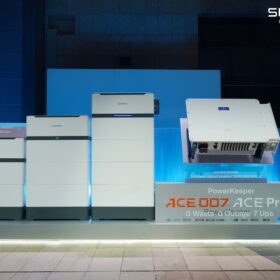
Sungrow unveils new modular C&I battery with long-duration storage capability
The new 12.5 kWh pack-based design supports flexible configuration up to 250 kWh per system. An optional long-duration combiner box supports 2–4 clusters, expandable to 1,000 kWh and 8 hours of storage.
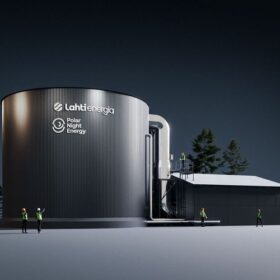
Finland’s Polar Night to build 250 MWh sand battery for district heating provider
Only months after inaugurating the world’s largest sand battery – a 1 MW/100 MWh thermal storage system – Polar Night has committed to building a project twice its size.
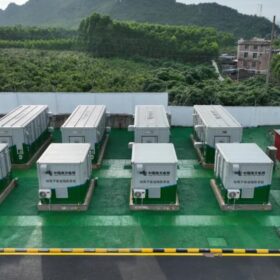
Massive 20 GWh sodium-ion battery manufacturing plant announced in China
After last year’s slowdown, investment in China’s sodium-ion battery sector is rebounding in 2025, and one of the biggest projects yet has now entered the development pipeline.
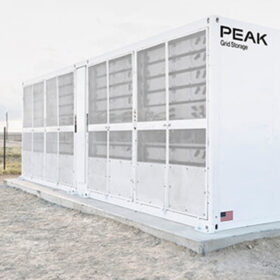
Peak Energy to supply up to 4.75 GWh of sodium-ion batteries to Jupiter Power
In a major milestone for the two-year-old Series A startup and the broader stationary energy storage sector, US-based Peak Energy has signed a supply agreement potentially worth more than $500 million.

LG Chem, Sinopec to jointly develop sodium-ion battery materials
From ESS News China Petroleum & Chemical Corporation (Sinopec) and South Korea’s LG Chem have signed a joint development agreement to advance key materials for sodium-ion batteries, as the technology moves closer to mass commercialization. Under the agreement, the two companies will collaborate on developing cathode and anode materials for sodium-ion batteries, targeting applications in […]
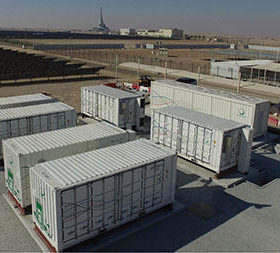
Japan’s NGK discontinues manufacturing of sodium-sulfur batteries
The manufacturer cites rising material costs, heightened competition from lithium-ion batteries, and the slow uptake of long-duration storage technologies as the reasons for the decision.
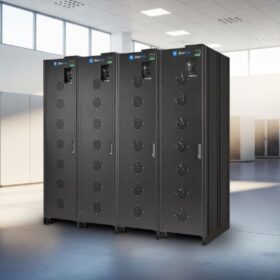
ZincFive unveils BC 2 AI battery system for both AI and traditional IT loads
The new nickel-zinc (NiZn) battery cabinet provides support for high-intensity AI pulses while also offering traditional IT backup within a compact footprint.
