Sandra Enkhardt

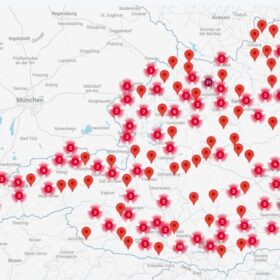
Austria publishes map of locations with available grid capacity for PV
The Austrian government introduced the Electricity Industry and Organization Act (ElWOG) two years ago, leading to the creation of a map of locations with available grid capacity for solar. The ElWOG require grid operators to be transparent about grid-connection capacity.
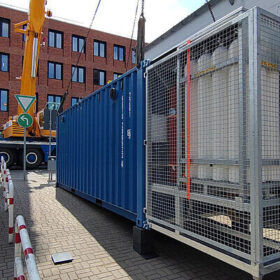
Turnkey solution for self-sufficient electricity, heat supply from hydrogen
Germany-based Ostermeier H2ydrogen Solutions has developed a containerized solution to produce heat and hot water from hydrogen. It includes a photovoltaic inverter, a battery, a heat pump, a heat and cold buffer storage system, an electrolyzer, a compressor, and a fuel cell.
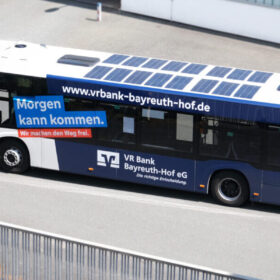
Sono Motors equips first bus with PV retrofit solution
Sono Motors has equipped its first bus with its PV retrofit solution, featuring 16 semi-flexible rooftop solar modules to feed 1.4 kW of output into the vehicle’s battery system.
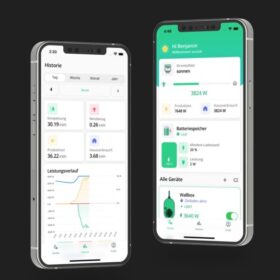
German startup offers app to maximize use of solar power surplus in homes
Clever-PV has developed a manufacturer-independent energy management solution for homes. The app is free to download from app stores and can be connected to PV systems, wall boxes, heat pumps, and other smart devices. This allows users to optimize the use of self-generated solar power.
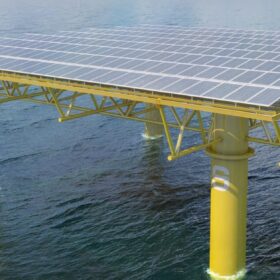
Offshore floating PV demonstrator to go online on Belgium’s North Sea coast
The SeaVolt consortium says it will launch an offshore floating PV demonstrator off the Belgian port of Ostend. The main companies – Tractebel, DEME, Equans and Jan De Nul – say the anchored floating array will collect data for at least a year to scale up the tech.
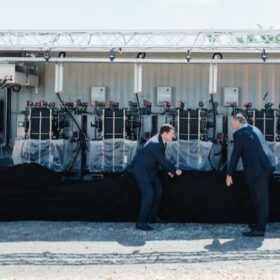
Austrian utility starts building 300 MWh organic flow battery project
Burgerland Energie has deployed a redox flow storage battery from German battery manufacturer CMBlu in the immediate vicinity of a PV-wind power hybrid power plant.

Meyer Burger builds 2 GW solar cell factory in US
Meyer Burger plans to start a 2 GW cell factory in Colorado in the fourth quarter of this year.

German research institute unveils 99.74% efficient power electronics for solid-fuel heat pumps
Germany’s Fraunhofer Institute for Applied Solid State Physics (IAF) has developed an ultra-efficient circuit topology for voltage converters with an electrical efficiency of 99.74%. The tech could considerably raise the coefficient of performance for electrocaloric heat pumps and the scientists are now considering components based on semiconductor gallium nitride (GaN) for higher power density and efficiency.
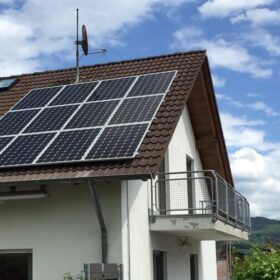
Germany deployed 6.26 GW of solar in H1
Germany installed more than 1 GW of new PV systems in June alone. Its cumulative installed PV capacity hit 73.8 GW at the end of the first half of this year.
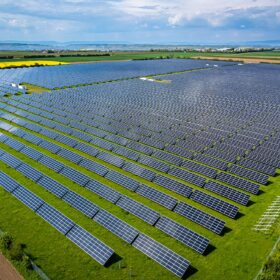
EU electricity market deal positive for renewable energy PPAs
The European Union needs to secure a final agreement on its new electricity market design by the end of this year.
