
Indian Railways eyes 500 MW of rooftop solar by 2021-22
With 95.67 MW already installed on railway buildings, a further 248.46 MW, awarded by the Railway Energy Management Company Limited, is under development.

Chinese manufacturer TBEA to open inverter gigafactory in India this month
The Chinese company plans to roll out 2 GW of inverters per year from a facility which will have 1 GW production lines for both central and string products.
Indian manufacturing-linked solar tender now reportedly oversubscribed
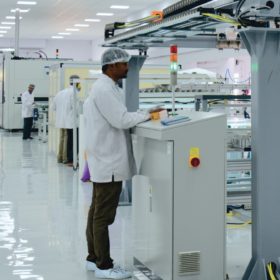
A new series of tweaks by Solar Energy Corp. of India appear to have paid off, as the organization’s ambitious, manufacturing-linked 7 GW solar tender has been oversubscribed by 1 GW.
Troubled Indian manufacturing-linked solar tender now reportedly oversubscribed
A series of new amendments by the Solar Energy Corporation of India appear to have paid off, as the organization’s ambitious manufacturing-linked solar tender has reportedly ended up oversubscribed by 1 GW – of the capacity offered as an incentive at least.

Indian fossil fuel giant NTPC tenders 1 GW of solar capacity
Developers have until November 18 to submit bids for projects anywhere in India. The projects are to be set up on a develop, build, demonstrate and transfer basis.
AC Energy, UPC Solar set up new Asia-Pacific joint venture
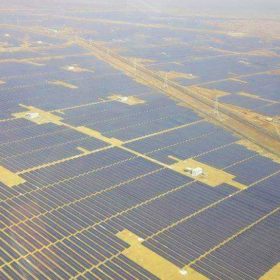
Philippines-based AC Energy will work with UPC Solar Asia Pacific – the solar energy unit of Hong Kong-headquartered UPC Renewables – to build more than 1 GW of solar in the coming years, with an initial focus on Asian markets such as India, South Korea and Taiwan.

AEPPL signs $689.7m deal for li-ion battery plant in western India
Automotive Electronics Power Private Ltd. (AEPPL), an India-based lithium-ion battery manufacturing venture between three Japanese companies, aims to produce 30 million cells per year by 2025.
Innolia Energy to invest $31m in solar module and EV product manufacturing in Hyderabad
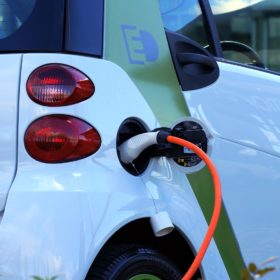
The U.S. company claims its 300 MW manufacturing plant in Hyderabad will deliver fully integrated, customizable solar panel, lithium battery pack and controller systems under a single roof.

Rajasthan eyes 50 GW of solar within six years
The Indian state plans to achieve half the amount by 2021-22 under its new draft solar policy. The package also suggests establishing a research hub, privately financed solar parks and encouraging commercial self-consumption of clean energy.
IndianOil to produce lithium-free EV batteries
India’s state-run fossil fuel giant has partnered with an unnamed foreign start-up to produce electric vehicle batteries using raw materials easily available in the nation.
