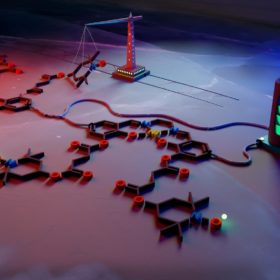
Nickel-salen for a battery that charges in 10 seconds
Scientists in Russia introduce a promising new material for battery energy storage, the product of more than three years of research. Incorporating a nickel-salen polymer into the cathode, the group demonstrated a battery that can charge and discharge ten times faster than today’s lithium-ion batteries. And though the battery still lags in terms of overall capacity, the group is confident that its discovery will lead to big improvements for lithium batteries.

Taiwan joins the gigafactory club
Taiwan Cement is planning to build a US$352 million EV battery factory in southern Taiwan. The 1.8 GW facility will produce high-charge-discharge nickel ternary batteries.
Solar PV driving green hydrogen to undercut gas, says BloombergNEF
BloombergNEF has shown that solar PV is the key driver of declining green hydrogen costs. The forecast shows costs falling by 85% by 2050, undercutting natural gas and blue and gray hydrogen production.
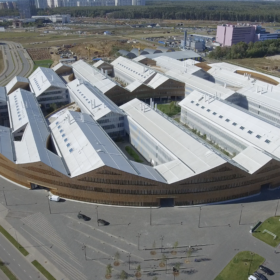
New materials for organic redox flow batteries
Scientists in Russia have designed a whole series of new compounds that could serve as catholytes and anolytes in organic redox flow batteries. The materials promise to open up new pathways for further research, and overcome some of the challenges for organic redox flow batteries in commercial, large-scale energy storage projects.
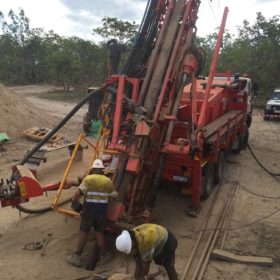
Australian mine lays claim to ‘battery grade’ lithium production
Australia’s only lithium mine outside of Western Australia, Core Lithium’s Finniss Lithium Project, has produced “battery grade” lithium hydroxide, according to the company, with Core hoping the development will place it at the “forefront” of lithium production for the global renewable energy and EV markets.
A long-lasting aluminum battery
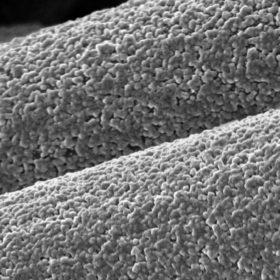
Scientists in the U.S. developed an aluminum battery that demonstrates better than 99.5% reversibility, and could offer “up to 10,000 error-free cycles”. By incorporating a substrate of carbon fibers into the anode design, the group gained better control over chemical bonds that form as the battery charges, leading to greatly improved performance.
GoodWe launches two residential batteries
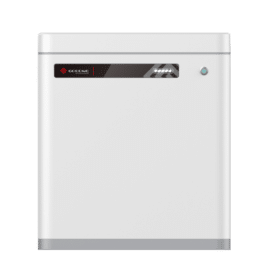
The Chinese manufacturer has unveiled a low-voltage battery with a modular design and a high-voltage storage system which is claimed to have a one-hour, ultra-rapid charge rate.

India connects community energy storage to grid
Tata Power Delhi Distribution has installed a 150 kW/528 kWh battery energy storage system at a substation in New Delhi. The system will help the utility to manage peak load and frequency regulation, while providing 150 kW of power backup for durations of four hours.
The Hydrogen Stream: Projects move forward in China, Japan, Australia and across several European countries
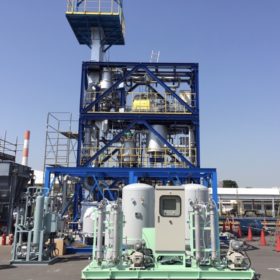
Sinopec wants to build 1,000 hydrogen refueling stations by 2025. Ways2H is building a facility in the Tokyo area that will convert daily 1 ton of dried sewage sludge into 40-50 kilograms of hydrogen for fuel cell mobility and power generation. Ørsted wants to deploy two renewable hydrogen production facilities for a total of 1 GW by 2030. Wacker Chemie is planning to produce green hydrogen and renewable methanol at its German site.
Australian utility to build floating PV plant, 200 MW battery
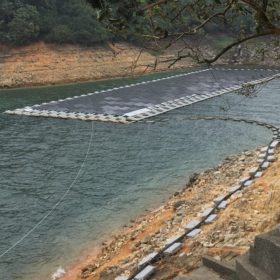
AGL Energy has revealed plans for a floating PV project at its Loy Yang power station in Victoria, Australia. The energy giant is already producing brown hydrogen for export to Japan, and has applied for a 200 MW battery at the Loy Yang site.
