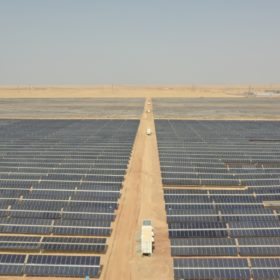
Solar challenges and trends and Covid-19 discussed at 2020 Africa Energy Forum
The 24-day, digital 2020 Africa Energy Forum kicked off on October 20. The event brings together African energy sector officials to identify opportunities, air their views, form partnerships, and take the necessary steps to improve the industry. For solar, challenges in policy making, procurement processes and the effects of the Covid-19 pandemic were discussed, as well as emerging trends such as solar digitalization.
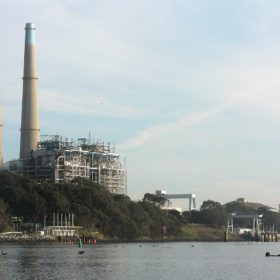
Europe a storage policy laggard according to Wood Mackenzie
A few years ago, Europe led the pack in terms of storage deployment but it will soon be overtaken by the U.S. and China, according to Wood Mackenzie analysts, largely because of different policy approaches either side of the Atlantic.
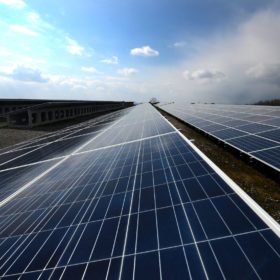
Spanish government to allocate over 10 GW of PV in auctions until 2025
In this year’s procurement exercise, the Spanish authorities should assign more than 1 GW of solar capacity while in next year’s auction, over 1.8 GW is expected to be allocated.
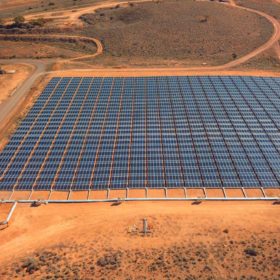
South Australia pushes green hydrogen export project
The South Australian government has followed up the recent launch of its Hydrogen Export Prospectus with a promise to provide US$27 million in funding for export infrastructure upgrades to a new green hydrogen and green ammonia project.
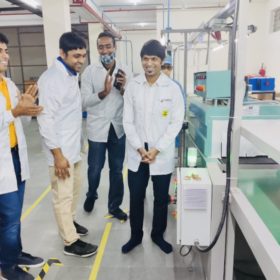
Indian lithium battery factory begins production
Inverted Energy has started manufacturing at its 100 MWh lithium battery assembly facility at Okhla, New Delhi. The plant will initially produce batteries for energy storage systems in the residential and commercial sectors, and for electric-mobility applications. The plan is to eventually cater to critical applications in the telecom and health care sectors.

Dual-ion battery prototype promises safe and cost-competive energy storage
Scientists have fabricated a working battery using a new type of dual-ion chemistry. The design avoids many of the rare or expensive materials found in today’s lithium-ion batteries, and also comes with an inherently lower risk of fire. The battery showed promising performance, and its creators say they have identified several areas where performance could potentially be improved.
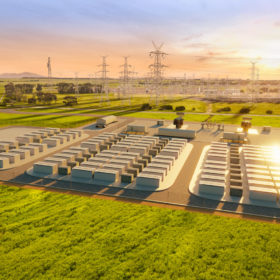
Giant battery to unlock Australian renewables
The Australian state of Victoria is on track to host one of the world’s largest lithium-ion batteries. The 300 MW/450 MWh Victoria Big Battery will be constructed on the outskirts of Geelong.
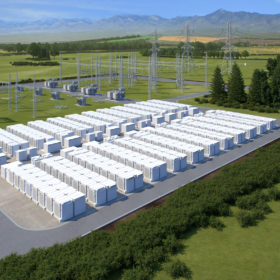
Finnish brewery to deploy 20 MW battery and virtual power plant
A number of partners are involved in a project which aims to bring down the energy consumption and carbon emissions of a beer company site using smart algorithms.
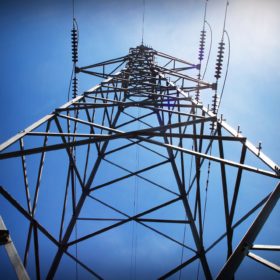
Toshiba and Next Kraftwerke prepare for Japan’s energy transition
The electronics brand has announced plans for a virtual power plant aggregator JV with German specialist Next Kraftwerke ahead of the opening up of the control reserve market in Japan in April – and the planned switch from clean energy FITs to feed-in premium, top-up payments a year later.
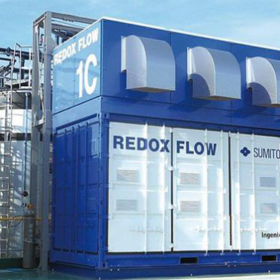
TNG sets up vanadium redox flow battery business
TNG Ltd. has set up a new subsidiary, TNG Energy, to advance its green ambitions by making vanadium redox flow batteries for off-grid solutions.
