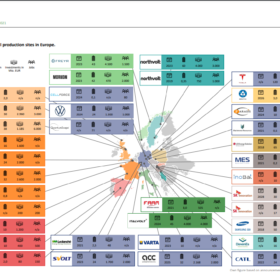
Europe’s gigafactory boom in full swing with another plant announcement
The list of planned gigawatt-scale battery cell manufacturing plants in Europe has grown, with Anglo-Korean battery maker Eurocell announcing plans for a gigafab in Western Europe to start manufacturing at scale within 12 months.
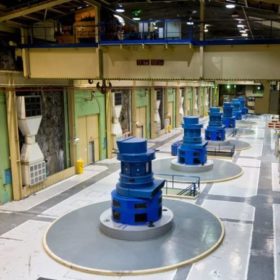
Australian duo make shortlist for 600MW green hydrogen project in New Zealand
Two of Australia’s most prominent energy players, Fortescue Future Industries and oil giant Woodside Energy, have been included on a shortlist of potential development partners for a proposed 600MW green hydrogen production and export facility on New Zealand’s South Island.
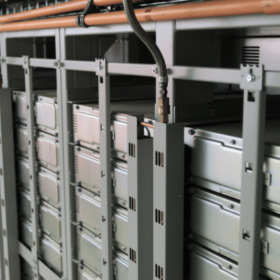
World’s largest lithium ion battery is down, again
The Moss Landing Energy Storage Facility Phase II in the United States set off fire alarms that activated a fault water suppression system, triggering a cascading set of events that resulted in roughly 10 battery packs melting down.
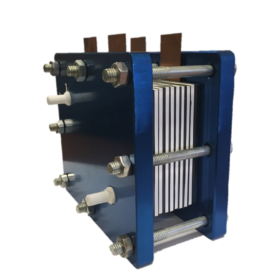
Viologen redox flow battery for renewables storage
Conceived for the storage of residential and large scale renewable energy, the device has a rated power of over 150mW/cm2, an energy density exceeding 40Wh/L, and a power density of 72.5mW/cm2. The battery was built with an anode made of inexpensive viologen and its cost, according to its creators, may be lower than $100/kWh.
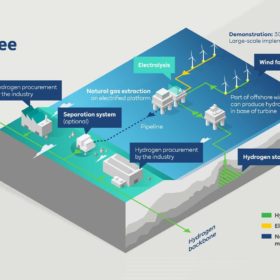
The Hydrogen Stream: Offshore green hydrogen project in the Dutch North Sea
As research into non-rare metal catalysts continues, companies in northwest Europe are working on an offshore green hydrogen demonstration project, the first European data center to run on green hydrogen, and on hydrogen-based solutions for container transport. Meanwhile, European institutions are prepping for stronger hydrogen collaboration with Africa.
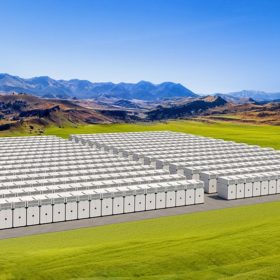
Powin to supply 5.8GWh of batteries for projects in US and Taiwan
The U.S. battery specialist has signed framework agreements with four developers to deliver systems for multiple projects.
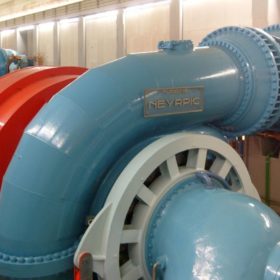
Ayana, Greenko partner on 6GWh of pumped-hydro storage
Greenko Group has agreed to provide Ayana with 6GWh of pumped-hydro storage capacity from its project in the Indian state of Andhra Pradesh.
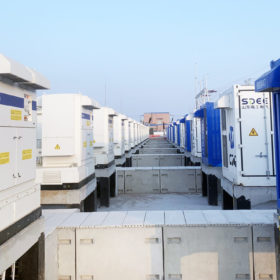
Sineng Electric energizes 100MW/200MWh storage facility in China
The project is relying on Sineng’s 3.15MW turnkey battery stations EH-3150-HA-UD 35 and is the first phase of a 300MW/600MWh that the Chinese state-owned power company China Three Gorges Corporation is building in China’s Shandong province.
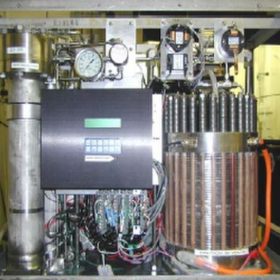
Hydrogen under $3/kg may ensure affordable seasonal energy storage in the US
Researchers from the United States have investigated how fuel cells and electrolyzers may be able to operate under intermittent availability provided by both wind and solar and have found that an affordable hydrogen-based system for seasonal energy storage could be achieved at a hydrogen price lower than $3, produced from inexpensive renewable electricity at $0.02/kWh.
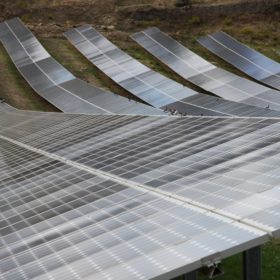
New poly fabs could head off first-half solar project slowdown
Norwegian analyst Rystad Energy has warned the solar industry could suffer the same effects of rising input prices as onshore wind developers grappling with ever more costly steel, with much hinging on how much solar panel raw material polysilicon can be manufactured.
