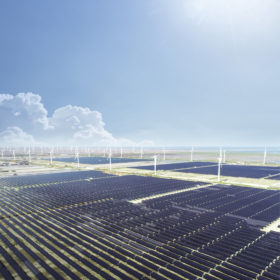
The weekend read: China’s battery storage awakening
China’s efforts to shift electricity generation from a coal-dominated system to a greener mix of renewables is not only centered on wind, solar and other technologies – the country is also rapidly pursuing energy storage. Vincent Shaw reports from Shanghai.
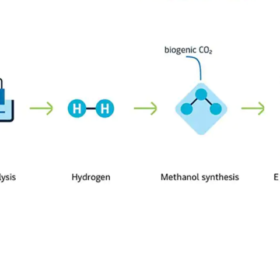
The Hydrogen Stream: First vessel to operate on solar-powered methanol in Denmark, giant green hydrogen project in China
Energy storage and clean fuel company ITM Power also opened a 1 GW electrolyzer factory in the United Kingdom and South Korea’s automobile parts maker Hyundai Mobis is investing US$1.1 billion in two hydrogen fuel-cell plants in its home country.

Israel shortlists 11 bidders in 300 MW solar-plus-storage tender
Construction of the solar-plus-storage facility is scheduled to take place in the Negev desert in late 2021, with completion expected in 2023.
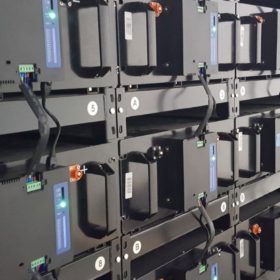
Energy storage appears to be fully charged for exponential growth
Lithium-based energy storage volumes are expected to grow by multiple orders of magnitude in the coming years, with a 1,000% capacity increase by 2023.
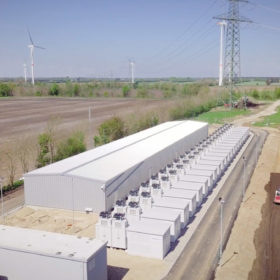
Grid-scale storage potential in India
A new study provides a novel assessment of grid-scale storage deployment in India, both in the near term and the long term. Scenario-based capacity expansion modeling shows when, where and how much storage can be cost-effectively deployed in India through 2050.
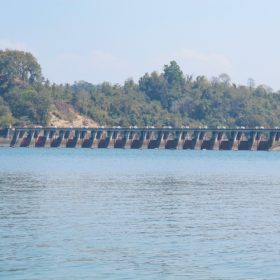
Combining big floating solar with hydropower
Scientists in Bangladesh have evaluated how a 50 MW floating PV plant could be integrated with the 230 MW Karnafuli Hydroelectric Power Station, located at the Kaptai Dam on the Karnaphuli River. They found that the two energy sources can be perfectly optimized and that PV can compensate for the reservoir’s shortage of water storage during the winter season while hydropower can compensate for the poor yields of the floating array during the monsoon season.

The world’s hottest heat pump
A Norwegian consortium has built an industrial heat pump that can reach a temperature of up to 180 degrees Celsius. The machine can be used with different industrial processes that rely on steam as an energy carrier and can reduce a facility’s energy consumption by between 40% and 70%, as it enables the recovery of low-temperature waste heat.
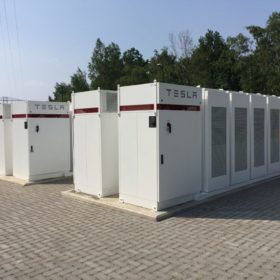
Novel salt solution for lithium-ion battery fires
Australian researchers have tested a novel lithium salt for high-voltage lithium batteries in electric vehicles and grid-scale storage systems. They claim the salt is less hazardous than conventional battery materials.

The Hydrogen Stream: big push from UK, European Union
U.K. business and energy secretary Kwasi Kwarteng has unveiled a new hydrogen strategy aiming at developing both the green and blue forms of the fuel. Furthermore, Thierry Breton, the EU commissioner for the internal market, has said Europe needs to increase its commitment to hydrogen and use nuclear to produce a decarbonized form of the gas.
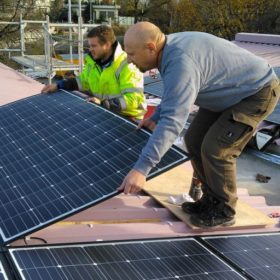
Energy transition to create 60m solar jobs by 2050
The switch from fossil fuels and nuclear will bring a jobs dividend thanks to the greater labor-intensity of renewables plants, according to a paper published by Finland’s LUT. However, the jobs dividend is unlikely to be evenly spread around the world, with Europe set to be a big winner.
