
Bidders plan to use ‘brown power’ to balance intermittency of solar in Singapore’s clean power tender
Solar developer NEFIN and electric company Tuas Power have tabled a joint bid to secure the rights to supply 100 MWh of ‘zero-carbon electricity’ from Malaysia to Singapore and said they initially intend to use “brown power” to secure supply during non-solar-generation hours.
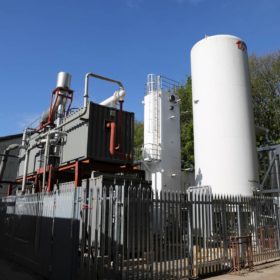
A closer look at liquid air energy storage
A British-Australian research team has assessed the potential of liquid air energy storage (LAES) for large scale application. The scientists estimate that these systems may currently be built at a cost between €300 and €600 per kilowatt-hour and that a positive business case could be favored by certain conditions, including a determined price structure in the energy market and the presence of a grid unable to support high levels of renewable energy penetration.
TC Energy advances 1 GW pumped hydro energy storage project in Canada
The pumped hydro project aims in part to reduce the amount of electricity that is exported from Ontario to several U.S. states at a loss.

Tesla sells Maxwell Technologies but dry cell tech for lithium-ion batteries retained
Tesla acquired the Californian supercapacitor maker in 2019, leading some to speculate its EVs would use ‘supercaps’ for top acceleration. Two years on, it appears Elon Musk has moved on and sold Maxwell to UCAP Power, but Tesla has retained the company’s dry electrode tech.

The Hydrogen Stream: GCL will use Ethiopian natural gas to feed its ammonia and blue hydrogen
Plus there is news this week of a green hydrogen tie-up in India, plans for another German production facility, and of new hydrogen transport networks for Switzerland and the U.S.
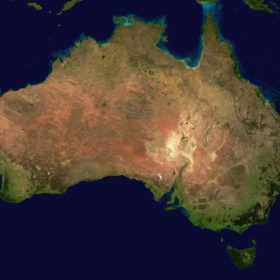
Mining giant unveils AU$73m solar-plus-storage project
Mining giant BHP has taken another step on the path towards a renewable energy future, commissioning a 48.2 MW solar-plus-storage hybrid power facility that will help power its Nickel West mining operations in regional Western Australia.
Chinese poly maker moves to establish natural gas-fired hydrogen business
An announcement by GCL-Poly to the Hong Kong Stock Exchange yesterday about the company’s hydrogen plans made no mention of any intent to deploy carbon capture tech to mitigate the emissions of what would otherwise be considered a ‘grey’, fossil fuel version of the energy storage medium.
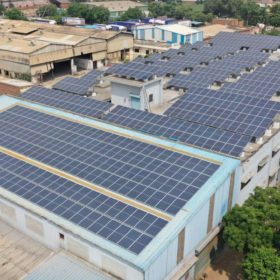
Commercial and industrial rooftops in India could deploy 1,875 MW of solar in 2021
According to a new report, India’s commercial and industrial sectors will increase their rooftop solar deployments by 47% year-on-year, with bifacials and large-size high-wattage modules offering cost-effective support for reducing electricity costs.

Maxeon secures EU cash to make its ‘stick-on’ solar panels in France
The TotalEnergies-controlled solar manufacturer will secure an, as yet undetermined chunk of a new €118.6 million low-carbon innovation fund to start producing its frameless, glass-free solar roofing products at Porcelette, in northeastern France.
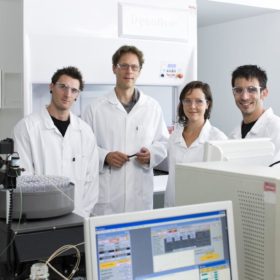
Aussie startup invents breakthrough non-toxic battery electrolyte that’s cheaper ‘by factor of 100’
Professor Thomas Nann told pv magazine Australia that a breakthrough idea was almost too simple: “Actually when we submitted the patent in the first place, the patent officers came back to us and said ‘well, that’s too trivial’ and we made exactly that argument – why did no one else do that then?” said Nann.
