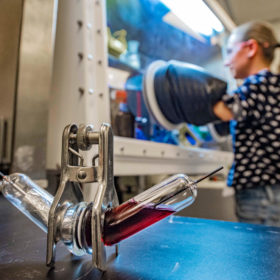
Sandia researchers develop new grid-scale energy storage battery
The battery operates at 230 degrees Fahrenheit, opening what researchers said could be “a whole cascading cost savings” including everything from less expensive materials to less insulation.
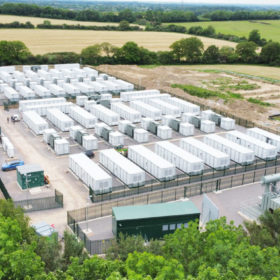
Sungrow switches on 100 MW/100 MWh storage system in the UK
One of the largest storage facilities in wider Europe has come online. In the future, it will provide network services and help prevent power outages in the U.K., such as the one that occurred in August 2019.
Cutting Europe‘s energy costs through interconnection
A new study from Stanford University professor Mark Jacobson models energy grids powered by 100% wind, water and sunlight across Western Europe. The study finds that in such a scenario, increased interconnection between countries would lead to lower energy costs and better grid stability, as well as a hedge against sudden loss of supply due to extreme weather or other events.
The Hydrogen Stream: More hydrogen for the port of Rotterdam
Chiyoda Corporation and Mitsubishi Corporation to conduct a joint feasibility study for a commercial-scale import of hydrogen from overseas sources to one terminal in the port of Rotterdam. Furthermore, the UK government said it wants to produce produce hydrogen from nuclear and Japan’s automotive manufacturer Toyota Motor is looking into geothermal potential for hydrogen production.

As Maui approaches 100% renewables, NREL models grid options
Maui’s electric power grid is expected to operate with 100% solar and wind on an instantaneous basis as early as 2024, and NREL is helping the island plan to reliably supply electricity.
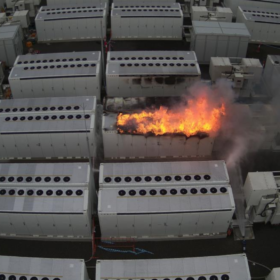
Fire at Australian big battery
Speculation will be rife as to the cause of the fire which destroyed one Tesla Megapack and damaged another in Moorabool on Friday. Investigators are waiting until the site is deemed safe to begin their forensic examination.

Bidders plan to use ‘brown power’ to balance intermittency of solar in Singapore’s clean power tender
Solar developer NEFIN and electric company Tuas Power have tabled a joint bid to secure the rights to supply 100 MWh of ‘zero-carbon electricity’ from Malaysia to Singapore and said they initially intend to use “brown power” to secure supply during non-solar-generation hours.
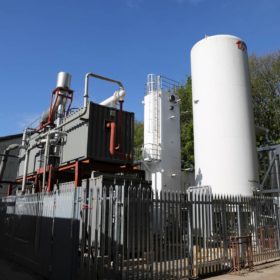
A closer look at liquid air energy storage
A British-Australian research team has assessed the potential of liquid air energy storage (LAES) for large scale application. The scientists estimate that these systems may currently be built at a cost between €300 and €600 per kilowatt-hour and that a positive business case could be favored by certain conditions, including a determined price structure in the energy market and the presence of a grid unable to support high levels of renewable energy penetration.
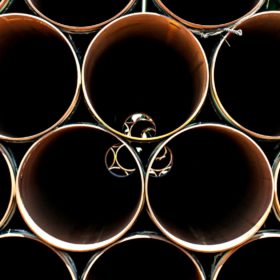
TC Energy advances 1 GW pumped hydro energy storage project in Canada
The pumped hydro project aims in part to reduce the amount of electricity that is exported from Ontario to several U.S. states at a loss.
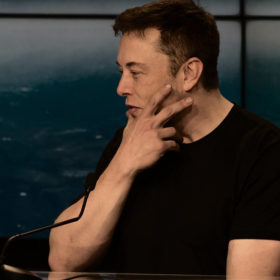
Tesla sells Maxwell Technologies but dry cell tech for lithium-ion batteries retained
Tesla acquired the Californian supercapacitor maker in 2019, leading some to speculate its EVs would use ‘supercaps’ for top acceleration. Two years on, it appears Elon Musk has moved on and sold Maxwell to UCAP Power, but Tesla has retained the company’s dry electrode tech.
