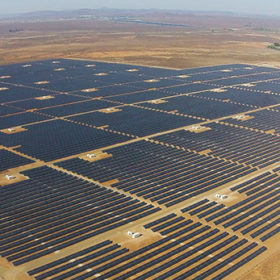
Sterling and Wilson to build solar+storage hybrid power plant in Niger
The latest project is another African opportunity for the India-based EPC player after successfully commissioning Nigeria’s first solar-plus-storage hybrid power plant, which is also Africa’s largest battery energy storage system.
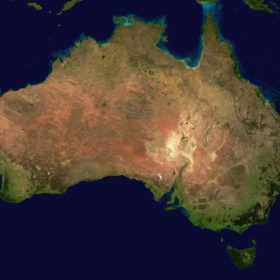
WA Govt approves 15 GW Asian Renewable Energy Hub, whole project now expanded to 26 GW
The Western Australian government has given environmental approval to the first stage of the Asian Renewable Energy Hub, a 15 GW hybrid solar and wind plant. The approval is a massive step forward for the project, which will eventually reach 26 GW, and an even larger step forward for green hydrogen development in Australia for domestic use and export.

UAE revises energy strategy in view of competitive PV prices
Falling solar prices are leading to a new energy strategy for the United Arab Emirates as local energy companies offer unbeatable prices that make green hydrogen increasingly affordable.
The state of European energy
The proportion of clean energy consumed in the EU continues to rise but the European Commission’s State of the Energy Union report is critical of failings in energy efficiency, low-carbon-R&D spending, and the removal of fossil fuel subsidies.
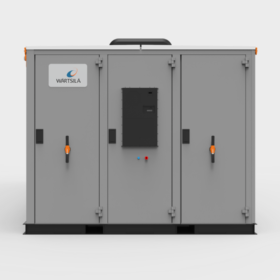
Wärtsilä’s 9 MW battery storage system reduces demand peaks
An independent power producer, AEP OnSite Partners, will be the first to deploy Wärtsilä’s new storage product.
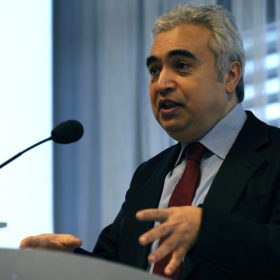
‘Solar is the new king of energy markets’
The advance of PV has been lauded by the International Energy Agency as it launched the latest edition of a flagship World Energy Outlook 2020 report overshadowed by the Covid-19 crisis and uncertainty over how long the economic recovery could take.
Chinese PV Industry Brief: Inner Mongolia set for 5 GW solar-storage-hydrogen complex
The China Energy Investment Corp is planning to invest RMB22 billion in a facility in the autonomous region. The state-owned mining and energy company has signed a framework agreement with the government of the city of Yijin Holo Banner for the project.
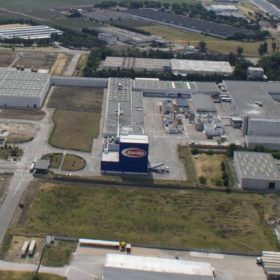
Solar tower for world’s largest pasta producer
The German Aerospace Center is working with partners in Italy to supply Italian pasta maker Barilla with electricity and heat from renewable sources.
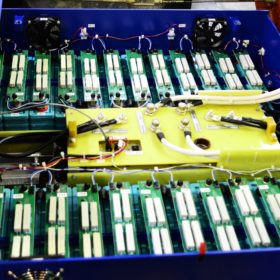
Russian nuclear giant Rosatom enters storage business
The state-owned company will manufacture module type lithium-ion traction batteries for electric vehicles, as well as energy storage systems for emergency power supplies, renewable energy resources, and the smoothing of load demand.
China will need 1.9 TW of solar by 2060 to hit net zero – WoodMac
The bill for full decarbonization of the economy – which is likely to see the decommissioning of no more than half the current coal fleet, with CCS doing some heavy lifting, according to the US-owned analyst – could come in at more than $5 trillion.
