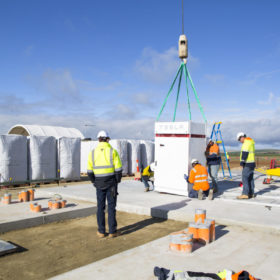
Neoen completes expansion of Tesla Big Battery in Australia
Neoen has successfully expanded the Hornsdale Power Reserve, otherwise known as the Tesla Big Battery, in Australia. If testing goes well, Hornsdale could start to function with an expanded remit of synthetic inertia services, which could have a big impact on regulatory changes.

Analysis: Initial results of Portugal’s solar+storage auction
Portugal’s recent PV auction marks a new era of battery storage for the country, says UK consultancy Everoze. It notes that the auction was so competitive that the winners had to cut their expected remuneration in the solar+storage category to negative values. It claims that the real winner is the government, as it is maximizing the value of scarce grid capacity, and argues that the auction could become a benchmark for nations with limited grid space.
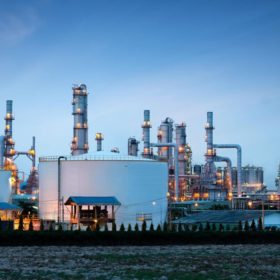
Renewables-powered 25 MW electrolyser at Dutch port
The large-scale green hydrogen facility is being developed by Dutch energy company VoltH2 at the North Sea Port. The project is planned to be expanded to 100 MW.
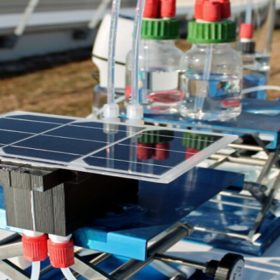
Different combinations of PV-powered electrolysers
An EU-funded research project coordinated by German research institute Helmholtz-Zentrum Berlin has tested several configurations for solar-powered hydrogen generation. First results showed which may be the most suitable PV technologies for electrolysis.
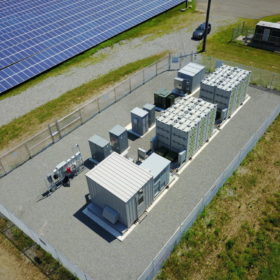
Eos announces 1.5 GWh of zinc battery storage in Texas, California
The summer of battery storage rolls on, with developers of zinc hybrid cathode technology announcing big news.
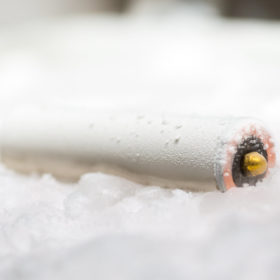
Lithium metal enabler for low temperature batteries
Scientists in the United States demonstrated a new route to improving battery performance. The group integrated a self-assembling layer which forms on the surface of the anode, preventing the formation of dendrites. While their prototype has a very short lifetime, the group is convinced approach could lead to better performing batteries, and is particularly promising for low temperature applications.
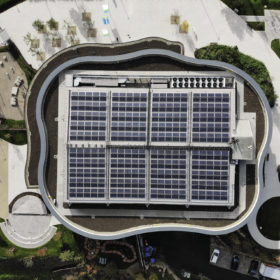
The weekend read: Hydrogen and the energy transition
Researchers are now simulating how the energy transition can be as successful and cost-effective as possible. As part of the simulation, they are also calculating how much hydrogen will be needed and where it could come from. In Germany, a recent study by Fraunhofer ISE showed that the cost is so low that the nation could gift itself the energy transition as a Christmas present.

Daily news round-up: Philippines could be set for 1.5 GW more solar and Tesla CEO has been dreaming of electric flight
Plus, details have been revealed of a 2 MW/2.5 MWh grid scale storage demo project in Switzerland and for a peer-to-peer renewable energy certificate marketplace in Southeast Asia.
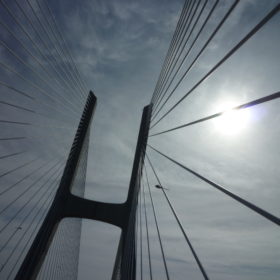
Portuguese government confirms world record solar price of $0.01316/kWh
The Portuguese government has revealed some of the preliminary results of the national solar auction which closed on Tuesday. Antonio Delgado Rigal, chief executive of energy forecasting service Aleasoft, said that the 15-year contracts awarded in the auction were the key to understanding the reason of such a low price. This, combined with the rights for land and grid connection guaranteed by the auction, makes attractive bidding at low prices.
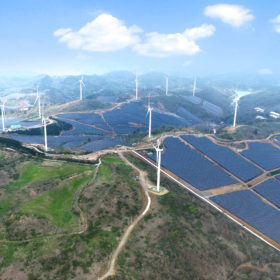
South Korea’s largest hybrid solar-wind project
A 133 MW hybrid solar-wind power plant linked to 242 MWh of storage is currently being built in a mountainous area in South Korea. Chinese manufacturer JA Solar has provided the modules for the PV section.
