
Work begins on 720 MW / 400 MWh solar+storage project in Australia
The New England Solar Farm will comprise more than 2.4 million solar panels, 150 power conversion units, and a lithium-ion battery storage facility.
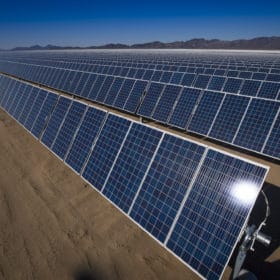
South Africa reveals preferred bidders for 2 GW tech-neutral tender
The tender is aimed at procuring 2 GW of capacity in response to the chronic short-term electricity supply gap that is affecting the country and its mining sector. The South African government has selected three LNG projects that may secure around 60% of the awarded capacity and several renewable energy projects including solar, wind and storage. The procurement exercise attracted a lowest bid of $ 0.0998/kWh.

The weekend read: Bifacial drives PV encapsulant switch
Suppliers of encapsulant materials – plastic sheets that are heated to laminate together the components in PV module stacks – are rapidly expanding to keep pace with module manufacturing in Asia and other parts of the world. Ethylene-vinyl acetate (EVA) continues to dominate the market, but new developments in module technology are driving a slow shift to more costly polyolefins.

Chinese PV Industry Brief: Work begins on 50 GW wafer factory, Shanghai Electric bets on green hydrogen
Tianjin Zhonghuan Semiconductor began building its new wafer manufacturing facility in the Ningxia Hui autonomous region. Shanghai Electric is setting up a hydrogen research center with the Dalian Institute of Chemical Physics of the Chinese Academy of Sciences.

Chile wants to export green hydrogen to Port of Rotterdam
The Chilean Minister of Energy and Mining has announced the signing of a memorandum of understanding to export green hydrogen to the Port of Rotterdam. The deal adds to the one signed with Singapore in early March to identify the best routes to reach Asian markets.

South Africa launches tender for 1 GW of PV
The South African Department of Energy has launched yesterday the fifth round of the Renewable Energy Independent Power Producer Procurement Program (REIPPPP). It seeks to procure 1 GW of PV and 1.6 GW of wind power.

‘Falling solar module costs are behind us’
Canadian Solar is pivoting towards energy storage and is preparing to IPO its manufacturing and Chinese solar project activity in China, under the CSI Solar operation, by July.
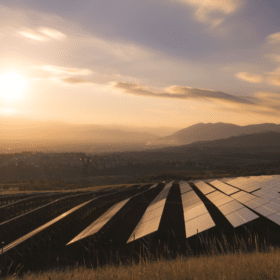
Romania’s first module factory
Romanian manufacturer Karpat Solar has acquired a 100 MW panel production line from Spanish provider Mondragon. The manufacturing facility will be located in Transylvania.
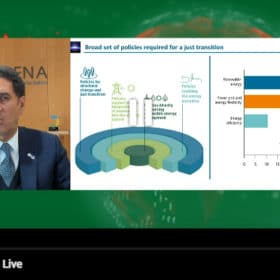
Global temperature goal of 1.5C needs 14 TW of solar by mid century
Renewable electricity will be linked to 90% of the actions needed to remove carbon emissions in 2050, according to the International Renewable Energy Agency, and the biggest volume of generation capacity will be provided by solar.
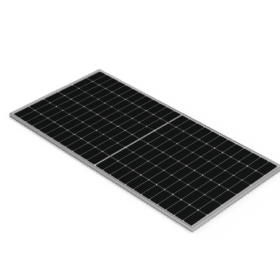
Bisol launches half-cut module with multi-busbar tech
The new panel was conceived for applications in the rooftop segment. It features an efficiency of up to 20.5% and a power rating of 360/455 W. The Slovenian module manufacturer used 166×166 mm wafers for the new product, as it claims they currently provide the best power and size ratio.
