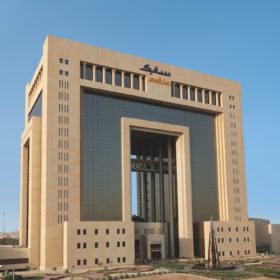
A 3 GWh redox flow battery factory in Saudi Arabia
German production equipment provider Schmid and Saudi chemical group Sabic are planning to begin activities at a new factory in Saudi Arabia, with production being expected to begin in 2021.
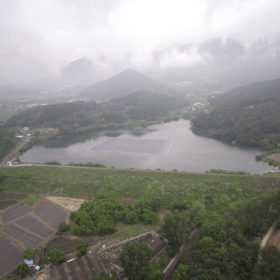
The weekend read: South Korea’s floating ambition
Every summer, millions flock to a festival in the city of Boryeong, 200km south of Seoul. The community offers visitors the chance to strip down and cake themselves in mud from the local tidal flats – a key geographic feature of the Korean Peninsula’s west coast. Another 50 km to the south lies the Saemangeum Seawall – the world’s longest manmade sea dyke, and the planned site of a massive 2.1 GW, state-backed floating PV installation.
Covid-19 weekly briefing: Evidence abounds of renewable energy gains at the expense of fossil fuels as the clamor for a green recovery rises
Portugal set a new coal-free record because of the pandemic as Belgium and Israel moved to help the renewables industry. But there was grim news in Mexico and Turkey, and Bangladeshi clean energy firms have appealed for more assistance.
A mega solar and wind project for Western Australia
The 15 GW Asian Renewable Energy Hub has been recommended for approval by environmental authorities in the Pilbara region. The project was originally intended to export clean energy to Jakarta and Singapore via subsea, high voltage DC cables but its focus has shifted to domestic industrial consumers.

US utility issues tender for 1 GW of renewables
Virginia-based utility Dominion plans to procure 16 GW of solar, 2.7 GW of storage and 5.1 GW of offshore wind in the next 15 years. Kicking off these new plans comes a request for proposals of 1 GW of solar or wind and 250 MW of energy storage.
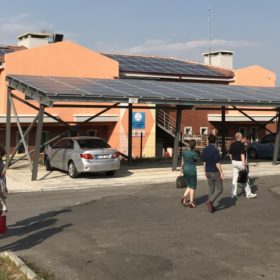
Covid-19 puts brake on Turkey’s solar sector
The energy regulator has suspended part of the licensing process for net metering applications, bringing the country’s PV sector to a halt.
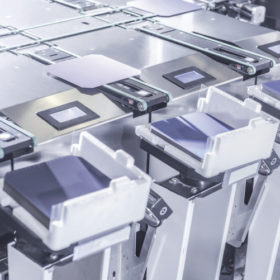
Meyer Burger mulls gigawatt-scale German solar fab
Chief executive Gunter Erfurt told a German radio station a solar factory in North Rhine-Westphalia could supply high-efficiency panels for a 10 GW floating solar project on the vast Hambach open-cast coal mine.
Another 11 solar mini-grids for Mozambique
The public body responsible for expanding access to electricity is seeking consultants to prepare a tender for rural PV mini-grids.
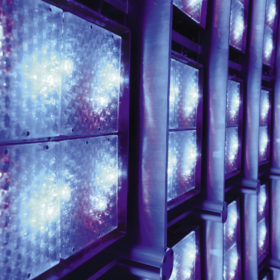
The weekend read: New technologies mean new approaches
Measuring the performance of a solar cell is a tricky affair, and even more so for new technologies such as perovskites and tandem cells. In the laboratory, these are measured over a period of several minutes to ensure accurate characterization. But as technology continues its journey toward commercial production, ensuring an accurate power rating without slowing down the manufacturing process presents a new challenge both for suppliers of flash testing equipment and those working on bringing perovskite solar cells and tandem devices featuring them to market.
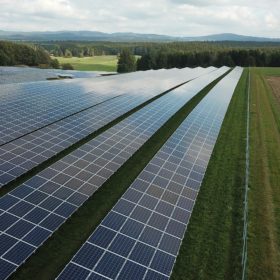
LCOE from large scale PV fell 4% to $50 per megawatt-hour in six months
Analysts at Bloomberg New Energy Finance say the lowest-cost projects financed in Australia, China, Chile and the UAE in the last six months hit a levelized cost of energy of just $23-29/MWh and the best solar and wind projects will produce electricity for less than $20/MWh by 2030.
