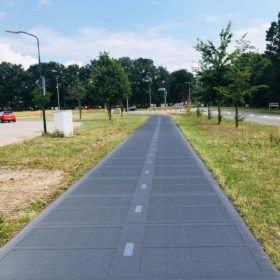
Construction begins on pilot solar bike lane in the Netherlands
The electricity generated by the PV panels will be used to power the surrounding lighting system, as well as to heat the lane in winter to prevent road slipperiness caused by snow, ice or water. The project is part of a plan by the Dutch government to test the viability of solar power production on road infrastructure.

Solar secures just 5 MW in Italy’s first 500 MW renewables auction
Only one 5 MW solar project was selected in the 500 MW auction, while wind project developers secured the remaining 495 MW. Final price for the selected solar park was €60/MWh.

Switzerland increases net metering tariff for rooftop PV
Swiss renewable energy association VESE has reported an average 4% increase for owners of PV systems not exceeding 10 kW in size. However, the remuneration continues to vary widely between the 30 largest network operators in the country.
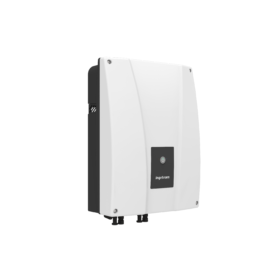
Ingeteam unveils new residential hybrid inverter
The manufacturer said its new hybrid device includes a maximum power point tracking system, which makes it ideal for east/west oriented rooftop PV systems. The inverter is available with power outputs of 3 kW and 6 kW and is compatible with most lead-acid and lithium-ion batteries that are made by leading storage specialists.
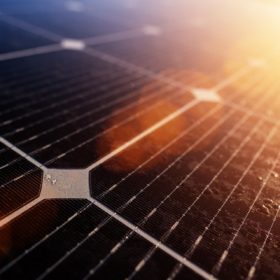
Raising the efficiency of polycrystalline cells with new luminescent EVA film
Chinese researchers have developed a pure EVA film, which they claim can enhance the conversion efficiency of conventional crystalline solar cells by around 0.50%. The film is able to convert UV light into strong visible light.

Spain reaches 8.7 GW of cumulative solar
The country saw the addition of 3.975 GW of new solar installations last year. Most of this capacity comes from solar projects selected by the Spanish government in the renewable energy auction held in July 2017.
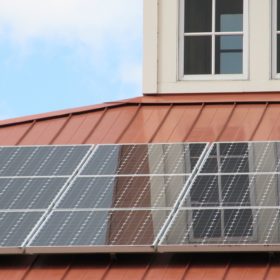
Vietnam confirms 20-year FIT for rooftop PV will be maintained at $0.0935/kWh
The generous tariff is considered crucial by the Vietnamese government to maintain high levels of development in the rooftop segment until 2021.
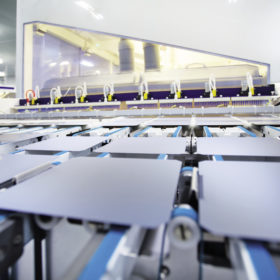
The weekend read: The rise of M6
The shift to the larger M6 wafer format could occur faster than many have expected. Promoted heavily by mono giant Longi, the format is said to be a good fit for both cell and module production, while still allowing for relatively trouble-free integration into PV arrays. And it all began in China.

Israel launches 300 MW solar-plus-storage tender
The government wants a 300 MW solar plant linked to large scale storage in the Negev desert. Construction is planned for late 2021 and completion in 2023.
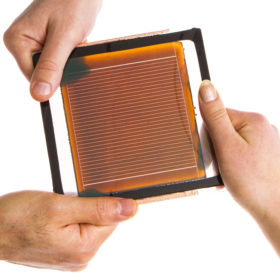
Perovskites meet the stability standard
European research group Solliance says its perovskite modules have passed three key industry standard reliability tests: Light soaking, damp heat and thermal cycling. The group said it is the first time perovskite modules of that size have achieved such results and represents a milestone in the technology’s move toward commercialization.
