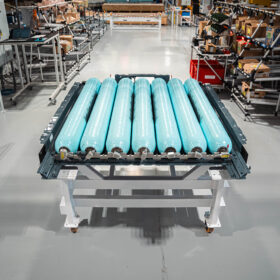
The Hydrogen Stream: BMW unveils tank for iX5 Hydrogen
BMW says its new hydrogen tank enables longer range and flexible production, while South Korea has revealed plans to develop large-scale liquid hydrogen storage systems.

The Hydrogen Stream: Dutch electrolyzer merger forms Alquion
Battolyser Systems and VDL Hydrogen Systems have merged to form Alquion, while Ming Yang Smart Energy Group plans to invest more than $10 billion in hydrogen and renewable energy projects in Ethiopia.
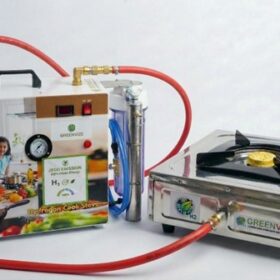
Indian startup launches plug-and-play hydrogen cooking unit
Indian clean-tech startup Greenvize has launched a compact hydrogen-based cooking system designed for residential and commercial kitchens. The system integrates a proton exchange membrane (PEM) electrolyser directly into a cooking unit, enabling on-site hydrogen generation from water without the need for storage or distribution infrastructure.
The Hydrogen Stream: Capacity outlook grows, deals shift
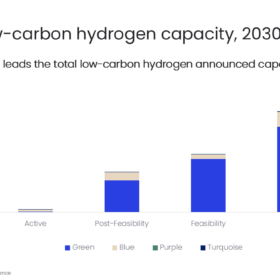
GlobalData says hydrogen capacity could reach 82.3 million metric tons per annum (mtpa) by 2030, while Topsoe has ended supply agreements with First Ammonia.

The Hydrogen Stream: Ionautics advances catalyst toward production
Sweden’s Ionautics has advanced its platinum-based hydrogen catalyst toward full-scale industrial production, while thyssenkrupp nucera has signed contracts for 300 MW of alkaline electrolysis capacity in Spain and 260 MW in India.
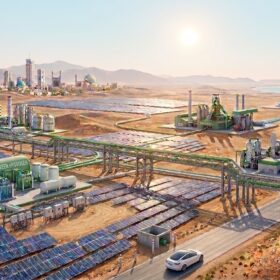
Solar-to-X could redefine Iran’s energy future
Iran is widely known for its oil and gas resources, but its strongest long-term energy asset may be the sun. New research shows how solar PV could drive a cost-competitive transition across power, heat, transport, industry, and desalination, while opening the door to a broader Solar-to-X Economy.
The Hydrogen Stream: Atome secures $420 million debt for Paraguay plant
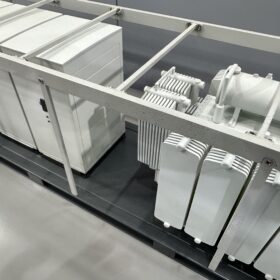
Atome says it has secured a $420 million debt package for a $650 million low-carbon fertilizer project in Paraguay producing 260,000 metric tons (MT) per year, while Asahi Kasei says it has begun installing a 1 MW-class electrolyzer at Finland’s first commercial hydrogen refueling station.
The Hydrogen Stream: BP and Iberdrola near Spain’s largest H₂ project
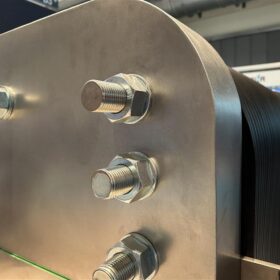
BP and Iberdrola say their 25 MW green hydrogen project in Spain is nearing commissioning, while Moeve has approved a final investment decision for a 300 MW project in Spain.
The Hydrogen Stream: ACES 220 MW Utah project nears completion
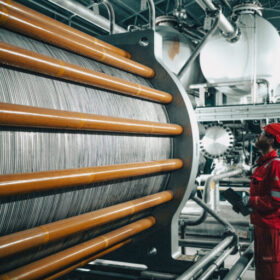
HydrogenPro says its 220 MW ACES Delta project in Utah is nearing completion, with all electrolyzers operating at full load, while the hub will store hydrogen in salt caverns with energy capacity two to three times that of all US grid-connected batteries combined.
The Hydrogen Stream: Dutch agribusiness installs 1 MW electrolyzer
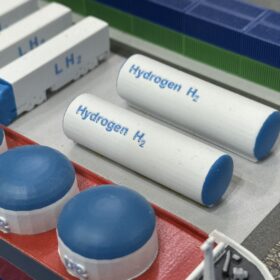
Dutch tulip nursery Rainbow Colors has completed the installation of a 1 MW solid oxide electrolyzer for on-site hydrogen production, while GlobalData says global low-carbon hydrogen capacity could reach up to 65.3 million tonnes per annum (mtpa) by 2030, driven largely by green hydrogen expansion in the Americas.
