The Hydrogen Stream: New way to make drug materials from hydrogen
UW–Madison has developed an environmentally friendly approach for producing essential drug ingredients by opting for hydrogen, while India has presented new green hydrogen standards.
The Hydrogen Stream: US awards $34 million to 19 hydrogen projects
As the US and British government press ahead with their hydrogen support projects, a team from Korea and the US has developed an iridium nanostructure catalyst, which decreased the amount of the chemical element. Meanwhile, hydrogen projects are proceeding in West Virginia, Denmark, Finland, and Japan.
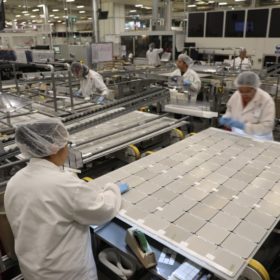
Chinese PV Industry Brief: JinkoSolar reports strong H1 earnings
JinkoSolar has reported a net profit of CNY 3.8 billion ($526.6 million) for the first half of 2023, while Maxeon has revealed plans to open a 3 GW TopCON cell and module factory in the United States.

The Hydrogen Stream: ITM Power shifts business focus to PEM electrolysis
ITM Power says it has restructured its business to shift its focus from hydrogen refueling to PEM electrolysis tech, while Stahlwerk Thüringen and gas network operator Ferngas have agreed to connect the Unterwellenborn steel mill in Germany to a hydrogen network by 2027.
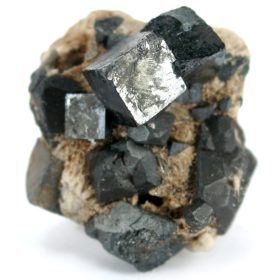
The Hydrogen Stream: Perovskites-based photoanodes for photoelectrochemical (PEC) water splitting
A research team has developed OHP-based photoanodes for photoelectrochemical (PEC) water splitting, minimizing the usual limitations. Meanwhile, China released its first hydrogen guideline, and Germany announced €18.6 billion for the hydrogen industry. Finally, a German company finds out that hydrogen trains are more expensive than battery-operated vehicles.
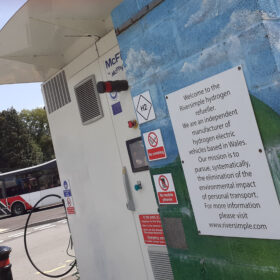
Green hydrogen offtakers can shape the industry’s development
With strong government backing; a systems approach to development that views each component of hydrogen production and delivery as a whole; and growing demand, Australia could be on track for a commercially viable green hydrogen industry by 2030.
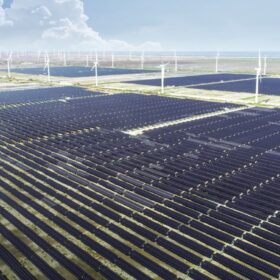
Saudi Arabia to power green hydrogen project with 2.2 GW of solar
Sungrow has agreed to supply inverter technology for a 2.2 GW solar plant under development in Oxagon, Saudi Arabia. The PV installation, which will be the largest in the Middle East upon completion, will provide power for Neom Green Hydrogen Co.’s (NGHC) $8.7 billion green hydrogen project.

The Hydrogen Stream: Scientists see iridium as obstacle to hydrogen aviation
A German research team says that demand for iridium, lanthanum and nickel could weigh on the growth of the global hydrogen-powered aviation market.
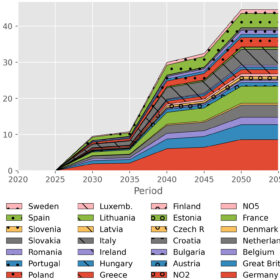
The Hydrogen Stream: Early adoption of green hydrogen leads to higher costs
Norwegian researchers say blue and green hydrogen could complement each other in the future, but early adoption of green hydrogen could result in increased hydrogen production and emissions.
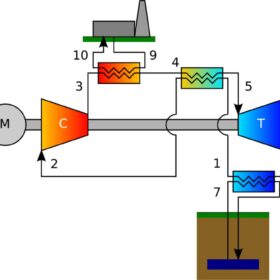
Preheating hydrogen with heat pumps may reduce cost of green H2 for heating by 10%
UK researchers suggested utilizing heat pumps to preheat hydrogen to very high temperatures, which they said could reduce the need for hydrogen by more than 20%. The process is also claimed to have the potential to reduce the European industry’s energy demand by approximately 200 TWh per year.
