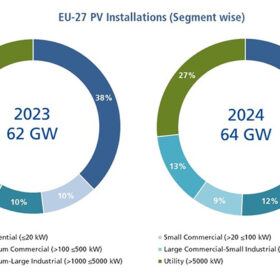
Are stakeholders ready for the segmental shift transpiring in the European PV and battery storage markets?
Many top European markets known for their dominant residential segments are prioritizing larger-scale projects, particularly in the commercial & industrial (C&I) and utility-scale segments. As this segmental shift gains momentum, the scale of investment and the complexity of maintaining projects in the new segment demand specific risk mitigation strategies. Consequently, investors, developers, EPCs, and—most importantly—C&I and utility-scale customers must reassess the criteria they use to select the most valuable and sustainable brands.
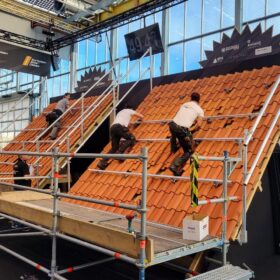
Key takeaways from Solar Solutions Amsterdam 2025
The Solar Solutions Amsterdam 2025 trade show highlighted the shift in Europe toward smarter, scalable energy systems, showcasing innovations in residential and commercial solar technology as demand for integrated, flexible solutions continues to grow.
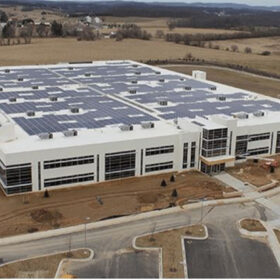
C&I solar grows 18% in the United States in 2024
Distributed solar fell 11% in 2024, dragged down by the residential segment, according to Ohm Analytics’s report on the fourth quarter of 2024. However, signs of recovery emerged with a strong fourth quarter and increasing installation volumes throughout the year.

Germany deploys 1.53 GW of PV in February
The country’s cumulative installed PV capacity reached approximately 102.3 GW at the end of February.

Horizontal single-axis trackers key to reduce agricultural yield losses in agrivoltaics
Fraunhofer ISE researchers investigating the impact of single-axis trackers on energy yield and agricultural losses in agrivoltaics have found that their use created an optimal balance between light available for photosynthesis and light available for electricity production.

The impact of PV on peatlands
Germany’s Fraunhofer ISE and partners have tested different PV systems on peatland and have pointed out the importance of only developing drained and heavily degraded peatlands for the dual use of carbon storage in peat and solar power generation.

Northern Ireland doubles solar curtailment in 2024
Northern Ireland turned down 16.9% of its solar in 2024, up from 7.9% in 2023.

Bangladesh seeking to improve net metering for rooftop PV
Bangladesh is seeking to overhaul its net-metering policy to encourage rooftop PV deployment by allowing 100% power injection and expanding eligibility to all grid-connected users, including those with single-phase and prepaid meters.
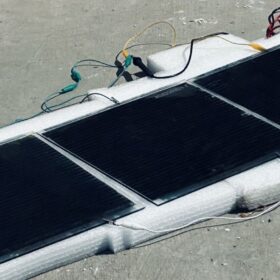
Indian startup testing 15%-efficient perovskite solar modules
P3C Technology and Solutions plans to initially produce the 30 cm2 modules at a pilot 60 MW manufacturing facility.
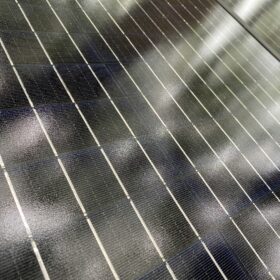
Tilt angle has greatest impact on power losses caused by soiling
Scientists in China have analyzed the impact of soiling of PV module performance and have found that tilt angle has the greatest impact, followed by irradiance intensity and dust deposition density.
