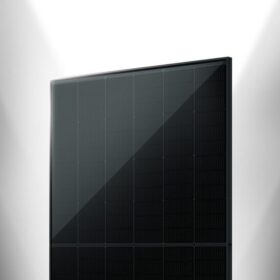
Trina Solar launches 760 W TOPCon module with 24.5% efficiency
The Chinese manufacturer said its new i-TOPCon Ultra panel is part of the Vertex N family and is intended for applications in utility-scale projects. It plans to begin mass production of the new modules in the second quarter of 2025, with an initial annual capacity of 10 GW.
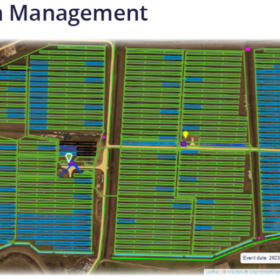
Solargain digital twin integrates condition monitoring, quality assurance
Above Surveying, a U.K.-based services and software company, announced adding large-scale PV condition monitoring to its Solargain digital twin tool as a result of its partnership with Kiwa PI Berlin and 2DegreesKelvin.

Germany could deploy 10 million heat pumps by 2030
Scientists have used open-source models to simulate heat pump rollout scenarios for the year 2030. Additional investments of around 54 GW to 57 GW of solar PV capacity in a least-cost solution would allow the installation of 10 million heat pumps by the end of the decade.
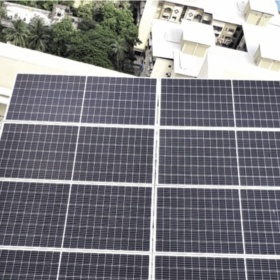
Gujarat leads India with 46% of rooftop PV installations under subsidy scheme
The state of Gujarat leads India in residential rooftop solar adoption, accounting for 46% of the 616,019 systems installed nationwide under the PM-Surya Ghar: Muft Bijli Yojana initiative as of Nov. 21, 2024.

Panasonic powers UK factory with solar-driven hydrogen fuel cell generators
Panasonic has launched a solar-powered hydrogen fuel cell project at its factory in Cardiff, Wales, with the microwave assembly now operating on renewable energy.

Agrivoltaics for peppers
Scientists have built in India a 1.8 kW agrivoltaic setup to grow peppers under the PV modules. The proposed project design is described as an agrivoltaic insect net house that could be use for all crops that require rigorous pest management.

Swiss startup offers wavelength-selective PV system for agrivoltaics
Voltiris has launched its latest greenhouse pilot project, installing its novel wavelength-selective PV system at a vegetable growing farm in Canton Baselland.
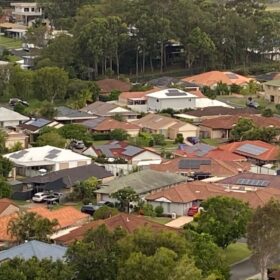
Australian regulator makes case for rooftop solar control mechanism
The Australian Energy Market Operator (AEMO) is pushing for the widespread implementation of “emergency backstop” measures to remotely switch off or dial down rooftop solar systems. It aims to manage the growing impact of distributed PV on the nation’s electricity grid.
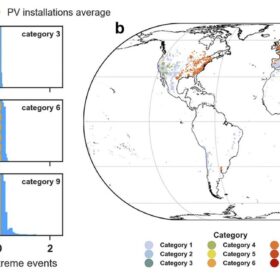
Researchers warn of risk from weather-related extreme low-production events for global PV fleet
New research from China shows that regions with dense PV installations, such as Southern China, Central and Northern Europe, Central and Eastern America, and Japan, are the most exposed to weather-related extreme low-production events. The researchers proposed a mitigation strategy to reduce the impact of these events on PV power generation.

The great grid transition in the age of data centers and EVs
Rapidly increasing energy consumption due to data centers, EVs and AI, requires adopting innovative energy strategies like distributed energy resources and microgrids that offer viable solutions for a more resilient, responsive energy infrastructure.
