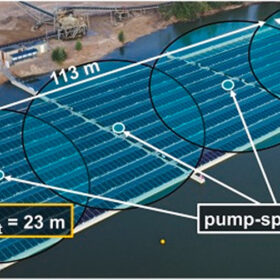
Spray cooling for floating PV
A research team in Germany developed a dynamic model of spray cooling for floating PV systems that couples thermal behavior, electrical performance, and active cooling, and validated it against a 750 kW installation. Simulations across four climates showed that spray cooling reduces module temperatures by up to 42% and improves energy yield by up to 3.8%, with benefits strongly dependent on local conditions.

Vietnam’s solar capacity surpasses 19 GW
Figures from the International Renewable Energy Agency state that Vietnam’s cumulative solar capacity reached 19,252 MW by the end of last year, indicating a 586 MW increase in 2025.
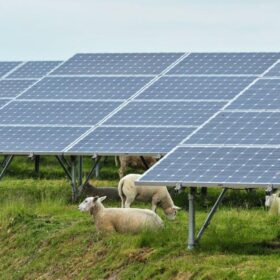
Agrivoltaics maintain or enhance forage quality, study finds
Researchers have analyzed the biomass and nutritional value of grasses and legumes for grazing dairy cattle, growing in agrivoltaics fields. The results showed that forage quality may be maintained or even enhanced in agrivoltaic environments.
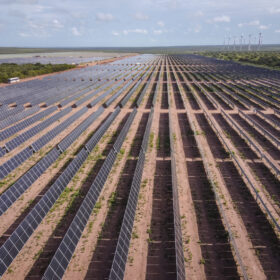
Solar self-generation could outperform PPAs in Brazil, delivering up to 32.9% savings
A study comparing power purchase agreements and solar self-generation in Brazil’s free market finds that direct investment in photovoltaic plants can cut costs by up to 32.9%, with solid returns but higher risk exposure. While regulatory exemptions significantly improve project economics, self-generation remains sensitive to costs, market prices, and policy changes that could affect long-term viability.

Colombia approves guidelines for integrating energy storage into electricity system
The decree represents a shift in grid operations with storage seen as improving reliability and enabling higher renewable energy penetration.
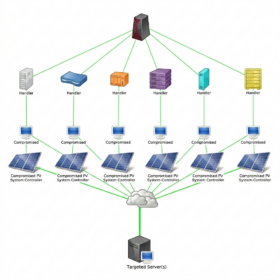
Cyber threats for PV: What are distributed denial-of-service attacks and how do they work
Denial-of-service attacks overwhelm networked systems with massive traffic from compromised devices, disrupting communication and making critical services like PV system monitoring and control unavailable. They can cause operational instability, reduced energy production, and safety risks, requiring layered defenses such as filtering, redundancy, and automated mitigation to maintain system resilience.
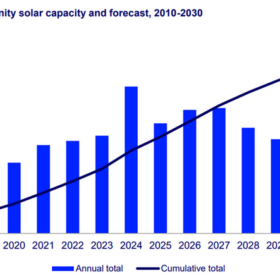
U.S. community solar passes 10 GW milestone despite market contraction
The country installed 1.4 GW in 2025, a drop from 2024 levels as leading markets like New York and Maine slowed.
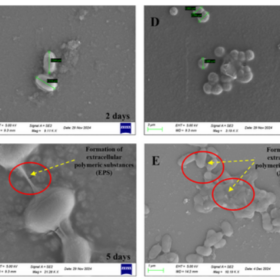
Microbial biofilms can reduce solar module yield by up to 30% in arid zones
A Spanish-Chilean research team has found that microbial biofilms in the Atacama Desert can significantly contribute to the soiling of photovoltaic modules, reducing short-circuit current by up to around 30% under accelerated laboratory conditions. The study highlights microorganisms as active agents in PV soiling and suggests they may influence optical losses, cleaning efficiency, and future mitigation strategies in arid, high-irradiance solar regions.

Cyber threats for PV: What are credential compromise attacks and how do they work
Credential compromise attacks allow adversaries to gain unauthorized access to PV systems by stealing or guessing valid login credentials, enabling them to manipulate operations, disrupt monitoring, or take control of critical assets. These attacks can lead to operational instability, reduced energy production, and safety risks, making strong authentication and access control essential for system resilience.

Free midday electricity key to drive consumer demand to match excess PV generation
Free midday electricity schemes aim to shift household demand into periods of high solar PV generation, reducing midday surplus and evening fossil-fuel ramp-up. Research on Australia’s Solar Sharer program suggests such incentives could significantly improve renewable utilization, but outcomes depend on consumer behaviour, load shifting, and rebound effects.
