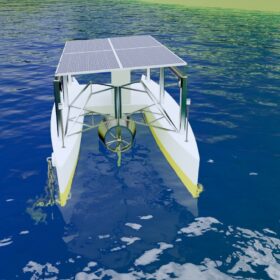
Hybrid tidal-photovoltaic system for modular renewables deployment in estuarine channels
Researchers in Brazil have developed and simulated a hybrid tidal–PV floating farm concept for estuarine channels, analyzing wake effects, turbine spacing and hybrid energy trade-offs. Results show that integrating PV with hydrokinetic turbines improves overall energy yield by offsetting wake-related losses and optimizing modular farm configurations.

Floating solar offers Morocco’s dams antidote to evaporation loss
Moroccan researchers say floating PV (FPV) installations on the country’s dams could simultaneously cut evaporation losses and generate electricity, but the country lacks a regulatory framework to enable large-scale deployment.

Egypt installs 800 MW of solar in 2025
Latest analysis from GlobalData expects Egypt’s annual solar additions to reach above 2 GW over the next three years, increasing to above 3.5 GW from 2029 onwards. Cumulative capacity is expected to grow from around 2.9 GW at the end of 2025 to 34.3 GW by the end of 2035.
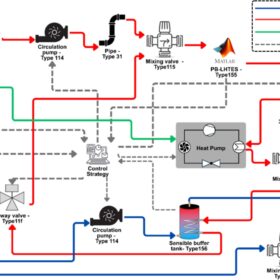
Hybrid latent-sensible storage can improve PVT-driven residential heat pump COP by 72.4%
A research team in Italy developed a PVT-driven heat pump system for domestic hot water production that combines packed-bed latent heat storage with sensible thermal storage to better balance supply and demand. Their simulations showed that hybrid storage coupled with temperature-based routing significantly improves system efficiency, raising heat pump coefficient of performance and increasing renewable energy utilization.

Grid operators may reduce renewables penetration if data center growth continues unchecked, says ENTSO-E
A new report from the European Network of Transmission System Operators for Electricity explores the potential for data centers to become flexible assets in Europe’s electricity system, as well as how to manage grid planning and grid security.

Argentina sees strong growth in solar distributed generation amid electricity price hikes
Argentina’s distributed generation sector is rapidly expanding due to higher electricity tariffs, lower equipment costs, and shorter solar project payback periods of around 3–4 years. Growth has accelerated since 2019, reaching over 4,000 user-generators and 143 MW installed, with strong private-sector-driven adoption.

Bolivia presents new law to boost renewables, private investments
The new draft law on electricity and renewable energy, developed by the Ministry of Hydrocarbons and Energy, is entering its technical, legislative and public consultation phase, with anticipated changes to generation, transmission, distribution and regulatory frameworks.
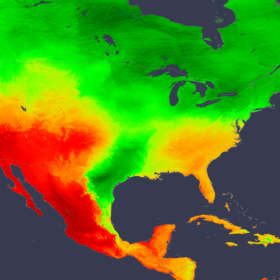
Pacific ridge reversal brings Western U.S. solar conditions back to average in April
In a new weekly update for pv magazine, Solcast, a DNV company, reports that April 2026 marked a reversal from March’s widespread high irradiance across North America, as weakening Atlantic and Pacific high-pressure systems brought more cloud cover to the western U.S. and neutralized Mexico’s earlier sunshine gains, while the eastern U.S. remained sunnier and warmer than average. Meanwhile, Canada stayed under persistent cold, cloudy conditions linked to polar vortex disruptions, and coastal Texas saw significantly reduced irradiance due to tropical moisture and heavy rainfall.
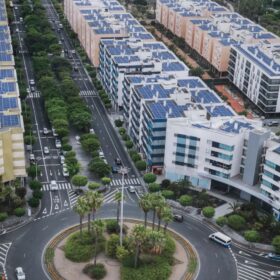
Spain accelerates rollout of energy communities
Spain has expanded its energy community programme with 20 new projects, bringing the national total to 262 and unlocking €108.4 million in EU-backed funding. Unevenly distributed across regions, the energy communities deployed in Spain to date combine solar generation, storage, efficiency, and mobility solutions, delivering 175.3 MW of PV capacity and involving more than 111,000 citizens.

Czechia considers stop to double taxation on solar, storage projects
The Czech government is reviewing proposals to streamline procedures for new solar power plants, including increasing the threshold for paying electricity tax to 100 kW and preventing double taxation on projects installing both solar and storage.
