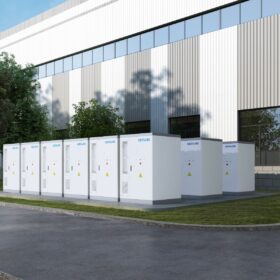
Weiheng Ecactus releases 233 kWh all-in-one battery system
Weiheng Ecactus has unveiled its new Tianwu battery system, with 233 kWh of capacity and 100 kW of output, giving users the flexibility to connect up to 10 units in parallel.
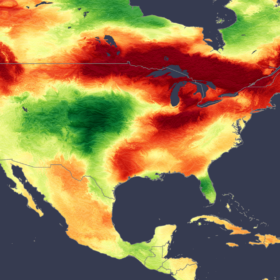
U.S. solar has less thanks to give, as El Niño pattern develops
In a new weekly update for pv magazine, Solcast, a DNV company, reports that, in November, weather patterns have started to resemble the characteristic El Niño signature, with low pressure in the northwest Pacific, and an enhanced subtropical jet stream spreading from the Pacific across the southern United States.

War in Ukraine triggered unique phase in renewables history
Human Geographer Thilo Wiertz speaks to pv magazine on the particular features that characterized the trajectory of renewable energies after the outbreak of the war in Ukraine. He emphasized how the geopolitical tensions arising from this conflict have reshaped the political debate about the energy transition, with the energy security perspective gaining in importance.
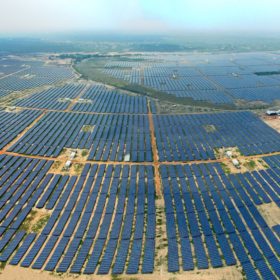
India’s solar installations hit 8.5 GW in first 9 months of 2023
India installed 8.5 GW of solar capacity from January to September 2023, down 25% year on year, with a projected total of 11 GW for the 12 months to the end of December.
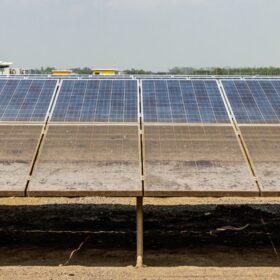
Solutions needed to future-proof big solar amid weather-related risks
Extreme weather is a growing risk to solar farms. Future-proofing through advanced technologies, leveraging data from novel sources, and accepting risk is vital, but rarely achieved today for a number of reasons. Insurers, lenders, developers, contractors and manufacturers recently came together in Melbourne, Australia, to discuss solutions to the intractable problem of weather risk.
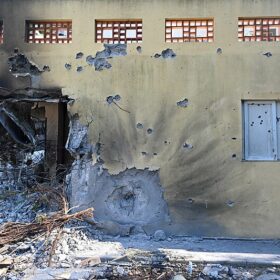
Israel to build energy communities in villages destroyed by Hamas
Israel’s Ministry of Energy and Infrastructure says it is currently developing a multi-year program for communities attacked by Hamas on Oct. 7. It aims to deploy 5 GW of energy in the destroyed areas, once residents return.
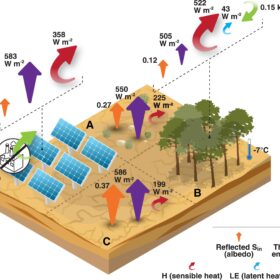
New research claims PV outperforms afforestation in combating climate change
Scientists from Israel have calculated how long it would take for PV plants and afforestation projects to offset their warming impacts caused by the darkening of land. The results showed that in drylands, PV fields could be over 50 times more efficient than afforestation.

Australia targets 32 GW of renewables with investment scheme
Australian Energy Minister Chris Bowen has announced a major expansion of the Commonwealth-funded Capacity Investment Scheme that will now target 32 GW of renewable generation and storage capacity to support the nation’s clean energy transition.

Soltec introduces hail defense algorithm for solar trackers
Hail losses in the United States exceeded $1 billion in 2021.

Italy’s January-September solar installations hit 3.5 GW
Italy deployed more than 3.51 GW of new solar in the first nine months of 2023, bringing its cumulative installed PV capacity to 28.57 GW at the end of September, according to the national energy agency.
