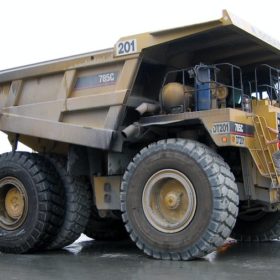
Mobile solar unit to power green hydrogen at platinum mine
A 600 kW, container-based solar array will be used to electrolyze green hydrogen at a mine in Limpopo, South Africa after Engie signed a two-year lease for the mobile system, at Anglo American’s Mogalakwena site.

A new spin on battery manufacturing
Scientists in Germany developed a new process for manufacturing battery electrodes, that they say could be both more cost effective and environmentally friendly compared to current technologies. The technique could be applied to a range of different battery materials/chemistries and its creators say they are in discussion with a number of battery cell manufacturers regarding pilot production.

‘World’s largest lead-acid battery output’ planned in Greece
Manufacturer Sunlight plans to invest €30 million to add 1.3 GWh of annual production capacity of lead-acid products by the third quarter of next year. The company will also devote €20 million to expanding its lithium-ion battery assembly lines.
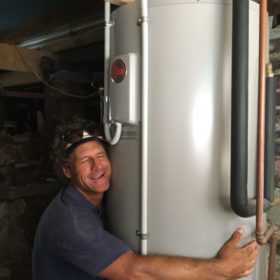
Rooftop PV for water heating – a residential super saver
Off-peak electricity rates in Australia are quickly becoming an unhelpful price signal for rooftop solar owners, who benefit by self consuming their excess solar ahead of drawing electricity from the grid at any time of day.
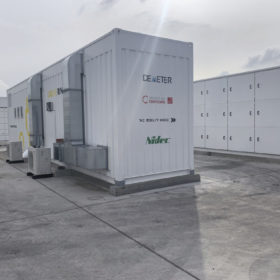
The weekend read: A lifetime plan for your solar+storage asset
For developers and investors who are ready to start talking about solar+storage projects, there are some interesting and not so straightforward decisions to be made on the sizing of assets. Siobhán Green, lead on battery storage in continental Europe for Everoze, looks at the different approaches to sizing and how to choose between them. In particular, she assesses the ‘lifetime’ factors to dimensioning and discusses how to plan for degradation and potential through-life resets to the revenue stack.
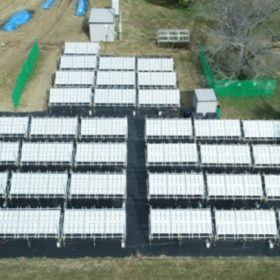
The Hydrogen Stream: New solar-powered hydrogen tech from Japan
Moreover, two big Russian corporations have unveiled plans to produce hydrogen and Portuguese utility EDP said it wants to set up a a pilot project for a green hydrogen plant in Brazil.
EDF inks PPA for 300 MW/600 MWh solar-plus-storage project in the US
The Desert Quartzite Solar+Storage Project is in Riverside County, California, and could enter service in early 2024.
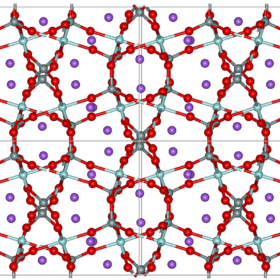
High-voltage non-aqueous hybrid flow battery with novel chemistry
US scientists claim to have created a crossover-free, high-voltage, non-aqueous hybrid flow battery with a novel chemistry for the solid sodium anode. The device has shown a high working voltage of around 2.6 V and a coulombic efficiency of 95.0%.
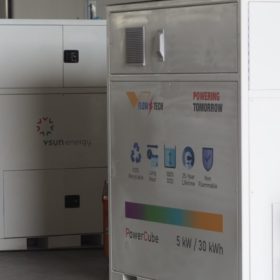
VSUN reveals redox flow battery tech in Australia
The suitability of vanadium redox flow battery technology for Australian residential and commercial applications will soon be tested, as Perth-based storage specialist VSUN Energy plans to deploy three 5 kW/30 kWh flow batteries.
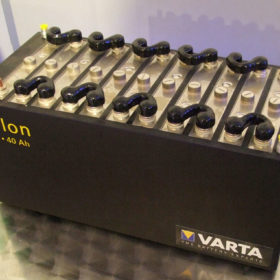
Lithium-ion vs lead-acid batteries
An international research team has conducted a techno-economical comparison between lithium-ion and lead-acid batteries for stationary energy storage and has found the former has a lower LCOE and net present cost. Through their analysis, which was performed assuming the use of the batteries in connection with a 10 kW, grid-tied PV system, the scientists concluded that lithium-ion batteries are the most viable solution.
