
Bahrain launches tender for 44 MW solar plant
The solar project is planned to be located at the University of Bahrain’s campus.

Transforming electric bus depots into solar energy hubs
An international research team has used data on Beijing’s public transit system to explore if bus depots could host solar installations and energy storage facilities to help reduce the load on the city’s grid. The researchers say they plan to generalize their proposed model to help other areas estimate possible return on investment of transforming other civic infrastructure into energy hubs.
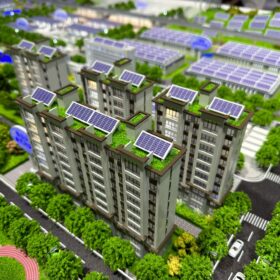
Global PV demand to hit 469 GW and 533 GW this year, says PV Infolink
PV InfoLink says that Chinese solar demand will reach between 240 GW and 260 GW this year, while European demand will hit 77 GW to 85 GW.

Pathway to Singapore’s solar development
Singapore could import large quantities of low-cost solar power from neighbouring countries using undersea cables, with the indicative cost being competitive with gas generation. Unlimited world-class pumped hydro energy storage is available in neighbouring countries in the range 50-5000 GWh to support very large scale transmission.
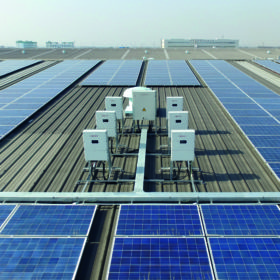
Two-layer power trading mechanism to support distributed solar
Researchers in China have proposed a new hybrid transaction model for distributed power trading. The model encourages the participation of aggregators in market transactions for distributed resources and promotes the expansion of distributed energy storage.
US partners launch 150 MW solar project in Taiwan
Energy services provider Elapath Energy and blockchain-based platform RenewableErgon are collaborating on a 150 MW solar project in Chiayi County, Taiwan.
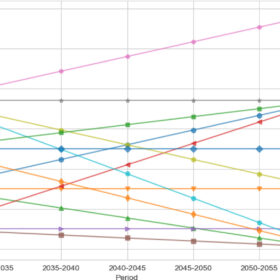
New research estimates average long-term green hydrogen price at $32/MWh
New research from Norway has found that deploying around 140 GW of green hydrogen generation capacity by 2050 could make green hydrogen economically viable in Europe. Reaching this scale may help balance system costs effectively while increasing renewable integration, making green hydrogen a self-sustaining technology without subsidies, according to the scientists.

Deye debuts new microinverter series
Chinese manufacturer Deye has launched a new microinverter series featuring three models, with PV input capacities ranging from 1,320 W to 2,200 W and output capacities between 600 W and 1,000 W.
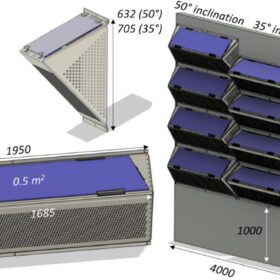
Photovoltaic noise barrier with ZigZag design
A Belgian-Dutch research group has designed a PV noise barrier that reportedly offers a good performance in terms of power yield, drivers’ safety and noise cancellation. Its payback time was estimated at between 6 and 10 years.

Hail-prone Texas solar project cuts insurance costs 72%
A case study by kWh Analytics demonstrated the value of building a resilient, weather-hardened solar facility.
