
South Korea installed 4.4 GW of PV capacity in 2021
South Korea’s cumulative installed PV capacity hit 22 GW at the end of 2021, according to provisional figures from the Korea Energy Agency.

Korea Zinc invests in gravity storage developer Energy Vault
Korea Zinc, non-ferrous metal smelting company, has agreed to invest $50 million in Energy Vault, a Switzerland-based gravity storage specialist, in order to use its tech to decarbonize its refining and smelting operations in Australia.
New Yorkers fund 4 GW of solar for less than a cup of coffee per month
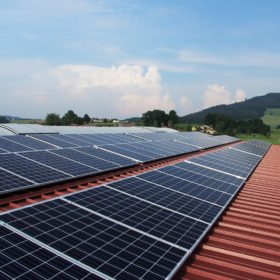
The New York Governor’s Office has submitted its financial proposal for 4 GW of distributed solar capacity by the year 2030, at an expected cost of $0.00082/kW.
The weekend read: BIPV no refuge
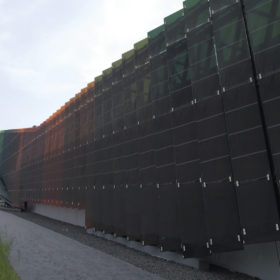
Deployment in the building integrated PV segment is accelerating, and so too are the number of solar products available to architects and developers. And while BIPV had long been the segment in which an array of thin-film technologies could shine, they are now in increasingly stiff competition with crystalline silicon rivals.
Solar-plus-storage for aquaculture aeration
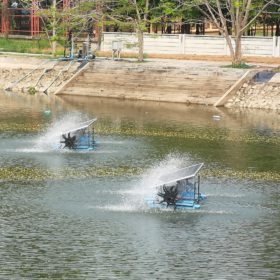
Recent research from Thailand has shown that solar-plus-storage on floating platforms could be the cheapest option to power energy-intensive aeration systems in aquaculture projects. The battery accounts for around 54% of the capital costs, which is why system sizing would be key for economic viability.

India cabinet approves intrastate transmission scheme backing 20 GW of renewable energy capacity
The second phase of the Green Energy Corridor (GEC) scheme for the Intra-State Transmission System will facilitate grid integration and power evacuation of approximately 20 GW of renewable energy power projects in Gujarat, Himachal Pradesh, Karnataka, Kerala, Rajasthan, Tamil Nadu, and Uttar Pradesh.
Vattenfall launches high-temperature heat pump solution to replace gas boilers
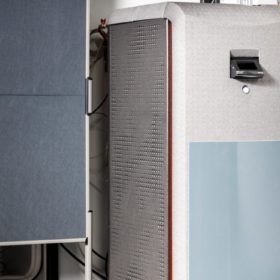
Developed in partnership with Dutch heating specialist Feenstra, the all-electric heat pump solution will initially be available in the Netherlands. The system’s buffer works as a heat battery that is used to provide heat to radiators and generate hot tap water.
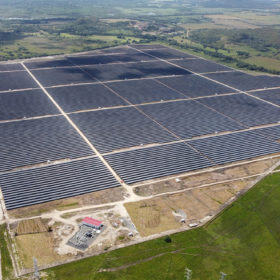
Central America’s largest PV plant goes online
A new solar project has been switched on in Penonomé, in the province of Coclé, Panama. It was built with 450,000 solar panels and 89 inverters.
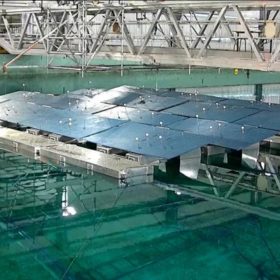
New tech to reduce mechanical stress in floating PV arrays
French start-up HelioRec has developed a new floater that can contain water to add more weight and increase its stability on the water. According to its creators, the new product can be 3.5 times more stable than conventional blow-molded floaters.
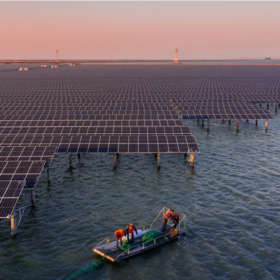
Chinese fish pond hosts 550 MW solar farm
Built by the Chint Group, the project is currently the largest in China combining PV power generation and fish farming. It is located in Wenzhou, a city with a subtropical maritime monsoon climate in China’s Zhejiang province.
