
Polish developer announces €225m green bond plan
The first batch of five-year investments, offered through German-owned Polish lender Mbank, will raise money to expand a solar portfolio R.Power claims already stretches to more than 4 GWp in its domestic market.

Netherlands allocates 3.53 GW of PV
The fall 2020 round of the Dutch SDE++ program awarded 75 MW of heat pumps and 310 MW of electric boilers to developers. About €2.12 billion of state funds will also be used to support a CO2 capture project that an international consortium is building in Rotterdam.
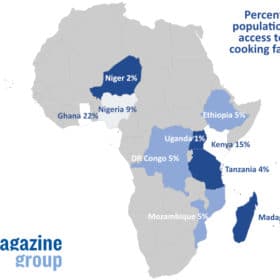
Universal electricity access by 2030 remains a distant dream
Energy efficiency, electrification of heating and transport, and the provision of clean cooking facilities are all going in the wrong direction as the Covid crisis deprived millions in sub-Saharan Africa of electricity use, according to a report by the IEA, IRENA, WHO, World Bank and UN Statistics Division.
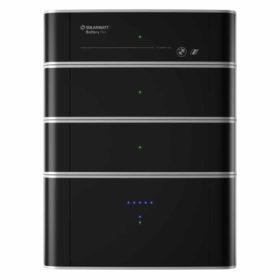
Solarwatt, BMW launch new storage system for residential PV
The smallest of the storage units has a capacity of 4.8 kWh and an output of 1.5 kW. It can be expanded to eight battery modules in steps of 2.4 kWh and has a maximum of 57.6 kWh, and 6 kW, of power.
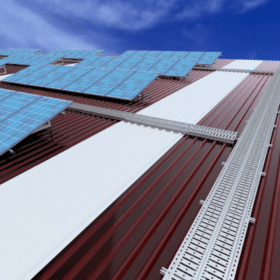
New walkways for the installation of rooftop PV systems
Spanish mounting system provider Alusín Solar has developed a solution to enable the transit of installers on roofs. It has recently commissioned a production line for this product, which it dubbed Carex.
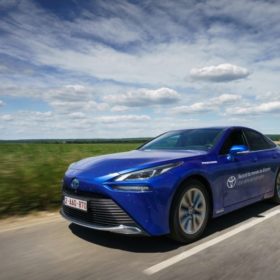
Madrid taxis to be powered by solar hydrogen
Spanish developer FRV has agreed to participate in a €100 million effort to generate hydrogen via a 10 MW electrolyzer, powered by a 20 MW solar plant.
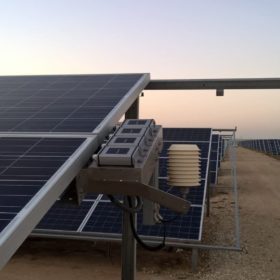
‘More room” remaining for small, medium PV projects in Spain
pv magazine recently spoke to Asier Ukar, managing director & senior consultant at PI Berlin in Spain, about the Spanish solar market, PV module prices, the most common failures in installations, and PV manufacturing in Europe.

Indian Railways tenders 740 MW of solar on its vacant land
The capacity will be set up on a build, own, operate basis and bidding in the tender closes on August 26.
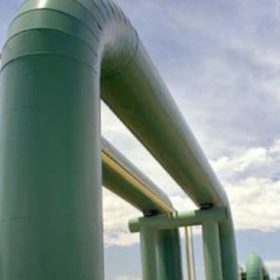
The Hydrogen Stream: 2.7 GW of operational electrolyzer capacity expected for Europe by 2025
According to two new pieces of research, Europe is on track to reach 2.7 GW of operational hydrogen electrolyzer capacity by 2025 and most of this capacity is expected to be located in Germany. Furthermore, three European gas associations have assessed the competitiveness of the different transportation options for hydrogen and have found it depends on the distance over which hydrogen is transported, as well as on scale and end-use.
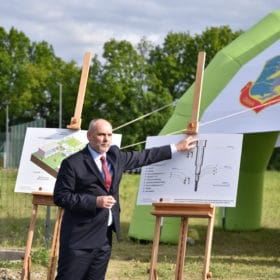
Photovoltaics, heat pumps to rescue failed geothermal project in Poland
The Polish government is supporting a hybrid renewable energy project based on a deep-borehole heat exchanger (DBHE) whose heat pumps are powered by photovoltaics. The heat generated by the facility will be used for district heating.
