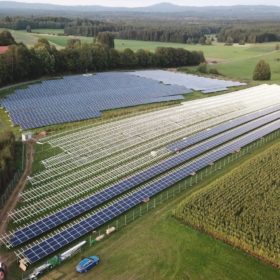
France launches multiple solar tenders
On August 5, the French energy regulator published the bidding rules for a new series of solar and renewable energy tenders. The application deadline is between October and December 2021.
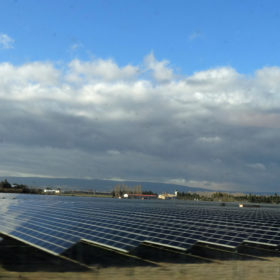
Change in ownership for 153 MW PV project in Romania
The 153 MW Ratesti PV project was acquired by Israel-based independent power producer Nofar Energy. The facility will be located in the Arges county, in southern Romania.
The Hydrogen Stream: Russia unveils hydrogen strategy, Germany provides more funds for power-to-X
ThyssenKrupp has also said it is working on a green hydrogen and ammonia project in the Emirates and three U.S. companies are planning to develop low-cost renewable hydrogen generation for use in transportation and distributed energy applications.
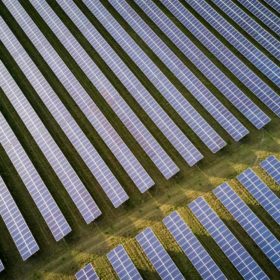
Heliene to open third module factory in the United States
The plant will produce super-high-efficiency heterojunction solar cell modules for residential and commercial applications.
South African state lender launches call to finance PV, wind projects
The Development Bank of Southern Africa (DBSA) has announced plans to support the construction of wind and solar plants ranging in size from 10 MW to 75 MW.
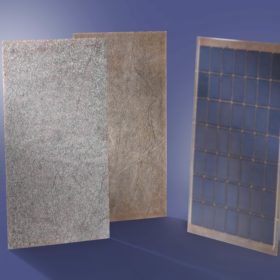
Facade BIPV modules designed with stone veneers
Developed by a German group of scientists, the panels are considered an ideal solution for aesthetically demanding applications in buildings with stone facades. Although their power yield is more than halved compared to conventional modules, the modules can also be used as partial shading walls or semi-transparent roof elements.
Indian developer signs PPA for 400 MW round-the-clock energy supply
ReNew Power will build 1.3 GW of hybrid renewable energy capacity in India – 900 MW of wind plus 400 MW of solar – backed by storage. Project costs have been estimated at approximately $1.2 billion.
Hanwha Q Cells acquires 5 GW project pipeline in France
South Korea-based solar module manufacturer Hanwha Q Cells has agreed to acquire French renewable energy developer RES Méditerranée (RES France) from U.K.-based company RES for €730 million.

Agrivoltaics for rabbit farming
U.S. scientists have developed a new way to combine PV generation and rabbit farming. They claim their new approach to agrivoltaics produces lower emissions and uses less energy than non-integrated methods.

Mongolia launches EPC tender for 10 MW solar park
The PV project is part of a program aimed at deploying 40.5 MW of solar and wind capacity in the country’s western and Altai-Uliastai regions.
