
Chinese solar production figures continue to ramp up
Quasi-governmental body the CPIA has released first-half figures for the world’s biggest solar marketplace which show production volumes for export markets continuing to expand and the domestic picture set to rebound after public solar subsidy levels were published.
Solarcentury chief calls for policy support for UK solar on day Boris Johnson is anointed
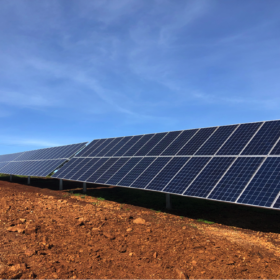
The London-based developer revealed blockbusting annual figures which show it is debt free, has almost £20 million in the bank, raked in more than half that figure in net profits in 2018-19 and expects twice as much in a year’s time.

Myanmar issues tender for rooftop PV
The nation is targeting an unspecified capacity of solar PV systems to be installed on households and public facilities across several of its regions. The successful projects will be jointly financed by the World Bank and the government of Myanmar.
EU coal regions could deploy 730 GW of PV while retaining employment rates, study finds
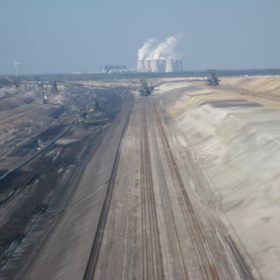
A study performed by the Joint Research Center of the European Commission has identified serious solar potential in Europe’s coal regions. According to the study, the transition to PV would also allow for similar full time employment equivalents as that of the coal industry.
Poland launches €235 million solar rebate program
The Mój Prąd scheme will be open to residential rooftop PV projects ranging in size from 2 kW to 10 kW. Furthermore, the Polish Parliament approved a new act that will allow for the wind and solar auctions planned for this and next year to move forward.

PV license fever in Greece continues
Applications to generate electricity from solar plants continue to surge, reflecting the sector’s revival in the country.

China’s air pollution reduces PV production potential by up to 13%
If China could travel back to the 1960s with its 2016 PV generation capacity it could harvest an additional 14 TWh of solar power, according to a study by academics at universities in Switzerland and the Netherlands. With a mixed record for reducing pollution, the country’s solar fleet output appears to be drastically affected by dimmed solar radiation.
BlackRock goes behind the meter with GE
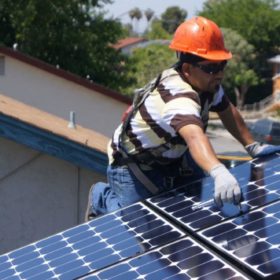
The startup formerly known as GE Solar has become a full fledged company, with GE and BlackRock announcing the creation of Distributed Solar Development, a behind-the-meter solar joint venture.
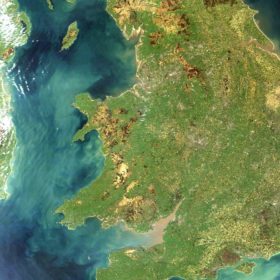
UK needs 13 GW of DSR, smart EV charging and V2G ramp up for net zero goal
… and it will be quite an effort. The U.K.’s grid operator, National Grid, released a new report on possible energy system transformation pathways, amidst growing public concern over climate change. Ramping carbon emissions reduction targets up from 80% to 100% prompts technical challenges. These can be overcome but will require full alignment of policy effort and individual awareness and decision making.

Zimbabwe’s struggle for solar
After several year of stalled and failed projects, Zimbabwe’s government is now seeking to implement existing projects, and to get rid of licensed projects that have never been realized. The first attempt will be pushing forward the 100 MW Gwanda solar project, which had been awarded to Intratek in 2015. The government is further planning to grant incentives to rooftop PV under net metering.
