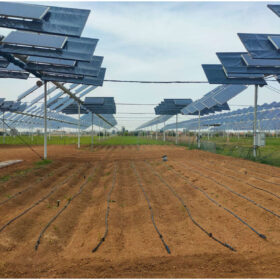
Multi-year field study finds that agrivoltaics can support healthy potato yields
Multi-year field trials conducted in Italy show that agrivoltaic systems can support healthy potato yields without major losses. Strategic shading and dynamic light management during critical growth stages proved key to maintaining productivity.
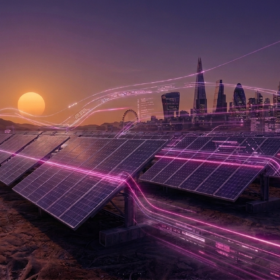
UK defining stronger energy cybersecurity rules after Poland attack
The UK government is proposing stronger cybersecurity rules for electricity and gas sectors, prompted by recent attacks on European energy infrastructure, including a recent incident involving solar power plants in Poland. The plans would extend baseline cybersecurity requirements to all licensed energy organizations and could also adjust compliance thresholds under NIS regulations.

Adani Green commissions 951 MW solar, hybrid capacity in India
Adani Green Energy Ltd. (AGEL) has commissioned 926 MW of solar and 25 MW of hybrid capacity across western India.

Lithuania’s solar capacity surpasses 3 GW
Lithuania added approximately 600 MW of solar last year, taking total capacity to 3,040 MW. Technical permits have been issued for an additional 4 GW of solar but with grid congestion becoming a primary constraint, future deployments will be increasingly dependent on integration with storage technologies.
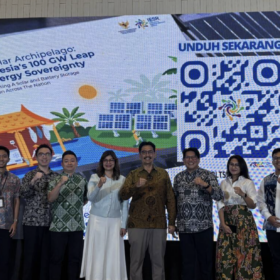
Indonesia’s path to 100 GW of solar
A study from the Institute for Essential Services Reform and Indonesia’s Coordinating Ministry for Economic Affairs explores how Indonesia can turn its target of deploying 100 GW of solar from mandate to mobilization.
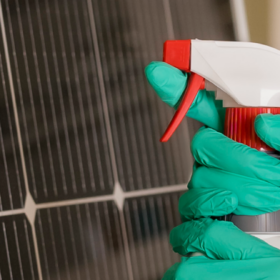
Beware of cleaning photovoltaic panels with dishwashing detergent
Researchers in Finland found that dishwashing liquid reduces solar module transmittance and performance, leaving residues even after rinsing. They recommend avoiding its use for cleaning solar panels.
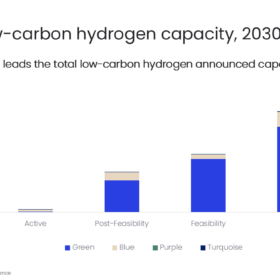
The Hydrogen Stream: Capacity outlook grows, deals shift
GlobalData says hydrogen capacity could reach 82.3 million metric tons per annum (mtpa) by 2030, while Topsoe has ended supply agreements with First Ammonia.

What are the selling points of marine energy?
Marine energy is renewable and generally predictable. It could thus compensate for the unplanned intermittency of solar and wind generation, its proponents argue. But several challenges still need to be overcome for the energy to become widely used.
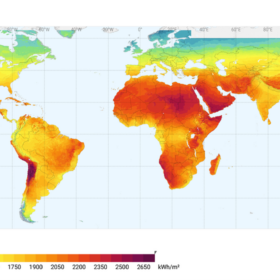
Solar generation performance with regional weather conditions deviating from long-term averages
Global solar PV continues its rapid growth, reaching around 650 GW in 2025, with record solar irradiation extremes across regions such as East Asia, India, and Latin America. With current production capacity and emerging technologies like perovskite-silicon tandem modules, PV is poised to surpass all other electricity generation technologies combined by the end of the decade.
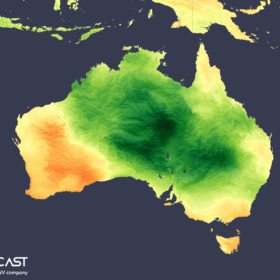
Wettest February since 2011 cuts irradiance across most of Australia
In a new weekly update for pv magazine, Solcast, a DNV company, reports that Australia’s wettest February in 15 years produced solar irradiance deficits of 15–30% across the country’s central and eastern regions.
