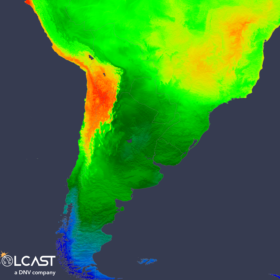
April ENSO shift lifts northern coastal irradiance while suppressing Brazil and northern Argentina
In a new weekly update for pv magazine, Solcast, a DNV company, reports that April 2026 brought mixed solar irradiance conditions across South America, with above-average GHI along Colombia’s Pacific and Caribbean coasts and parts of southern Argentina, while eastern and northern temperate regions — including Buenos Aires to Bolivia — saw reduced irradiance due to persistent cloud cover and wetter-than-average conditions.

TotalEnergies, Nextnorth close financing for 440 MW Philippines solar
TotalEnergies and Philippines-based developer Nextnorth have started construction of a 440 MWp solar plant in Isabela province after reaching financial close on $300 million of international bank financing.

Montenegro developer signs grid deal for 385 MW solar plant
M Energy d.o.o. has signed a grid-connection agreement with Montenegro’s transmission operator for a 385 MW solar project, which would be the largest in a country with around 30 MW of installed PV capacity.

20-month field tests show tracker-based bifacial PV outperforms fixed tilt counterparts with 13.5% higher ouput in desert enviroments
Qatari researchers found that bifacial 2P horizontal single-axis tracking PV systems in desert conditions produced up to 13.5% more electricity than fixed-tilt systems over long-term field testing in Qatar. The study also showed strong seasonal and technology-dependent performance, with tracker advantages varying with irradiance and weather conditions.
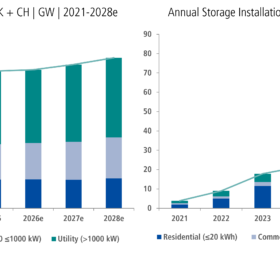
Europe’s solar and storage development: Selectivity amid rising global supply and returning energy shocks
Escalating Middle East tensions and global energy supply risks are accelerating Europe’s shift toward solar and storage, particularly in commercial, industrial, and utility-scale segments where energy security, resilience, and price stability are becoming central investment drivers. At the same time, expanding manufacturing capacity in China and India is redirecting surplus solar and storage supply toward Europe, creating a highly competitive and increasingly selective market where long-term success depends on quality, reliability, ESG alignment, and strategic market positioning.

California sets precedent by overriding local blockade for massive solar-plus-storage project
California is asserting state authority to revive the $700 million Soda Mountain project, marking a new era where Sacramento can reclaim authority from local counties to force stalled utility-scale solar and storage across the finish line.
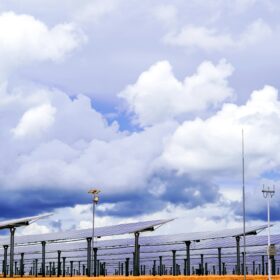
Italy probes PV companies over €60 million tax evasion and €33 million subsidy fraud
The Italian authorities have dentified seven Trentino-based photovoltaic companies, controlled by an unspecified German operator, accused of allegedly evading over €60 million in taxes and improperly obtaining €33 million in incentives from the state energy agency GSE.
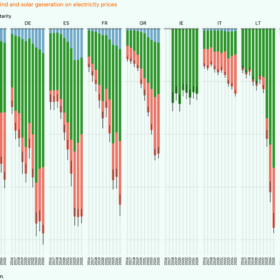
Renewables growth cut Spain’s electricity bills by 24.2% over the past two years
Spain and Portugal are 53% less exposed to gas price volatility than they were three years ago, according to a new report from Positive Money.
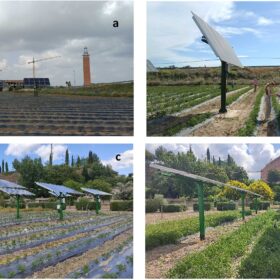
New irrigation tech helps reduce water use in agrivoltaics
Spanish researchers found that combining agrivoltaics with regulated deficit irrigation (RDI) can cut tomato irrigation water use by about 50%, while improving land-use efficiency through simultaneous crop and solar energy production.

Solar break quarterly generation records in Australia in Q1
In Q1 2026, grid-scale solar generation jumped 648 MW compared to the same period in 2025, recording an all-time quarterly high of 2,706 MW output, according to new figures released by the Australian Energy Market Operator.
