
IEA warns global solar growth may plateau at 540 GW annually to 2035
The International Energy Agency (IEA) said global solar capacity additions are projected to average 540 GW a year through 2035, as outlined in its World Energy Outlook 2025 report.
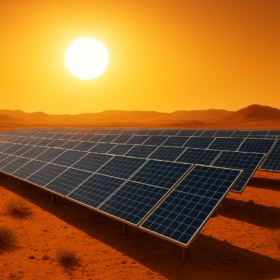
Sensorless approach for PV panel temperature monitoring
Researchers in United Arab Emirates have developed a novel model that relies on either the open-circuit voltage or the maximum power point voltage to estimate PV module operating temperature without using sensors.
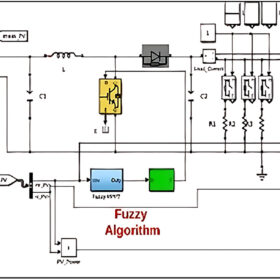
Optimizing PV system tilt angle, MPPT using fuzzy logic controller
Researchers in the Middle East have developed a fuzzy logic controller that simultaneously optimizes the tilt angle of PV systems and performs maximum power point tracking (MPPT). Year-long simulations indicate that the proposed approach increases power generation by approximately 20%.
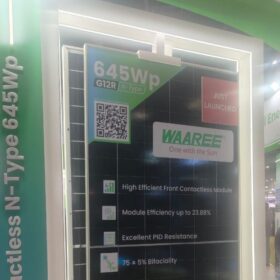
Waaree unveils 645 W back contact solar module with 23.88% efficiency
Waaree Energies has entered the back contact module business with a TOPCon dual-glass module. The new product is based on cells with G12R format.

Ghana starts working on nation’s largest solar project
Ghana has begun building the 200 MW Norbert Anku solar park, its largest renewable investment to date, with plans to expand the project to 1 GW by 2032.
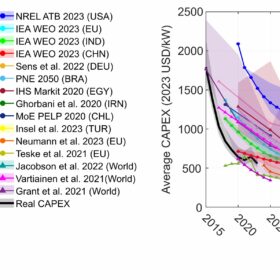
The future arrived early: Why our energy cost forecasts need to catch up
While solar modules and batteries have become icons of rapid progress, most energy models are still stuck in the past. A new global analysis shows that the cost of renewable energy has fallen far faster than expected. Solar PV, wind power, and battery technologies have already reached price levels that models once placed many decades ahead – a misplaced pessimism that risks misdirecting billions in climate investment and could distort long-term defossilization strategies.
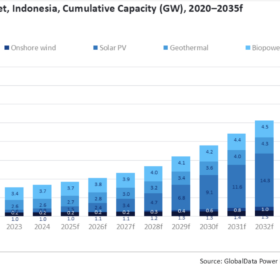
Indonesia expected to reach 23.2 GW of solar by 2035
UK consultancy GlobaData projects Indonesia will surpass 1 GW of cumulative solar capacity this year, before growth accelerates towards 9.1 GW by the end of the decade and 23.2 GW by 2035.
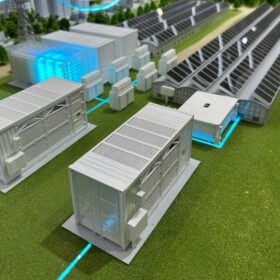
Three emerging structures for solar-plus-storage PPAs
The PPA price for pure photovoltaic projects has fallen by 20% over the past year, making such contracts less competitive. However, clear structures for bankable hybrid PPAs are now beginning to take shape, says Pieter van der Meulen, Senior Account Manager at LevelTen Energy, in an interview with pv magazine.

Detecting PV module defects at a single glance
Scientists in China have developed a new deep learning model based on the so-called “You Only Look Once” algorithm, which requires only one forward propagation pass through the neural network to make predictions,

Philippines increases allocation under fourth energy auction
The Philippines Department of Energy (DOE) says its fourth green energy auction marks a shift from pilot to mainstream deployment, with final approvals raising total capacity across solar, wind, and storage projects to nearly 10.2 GW, including 4.1 GW of ground-mounted and 2.2 GW of floating solar.
