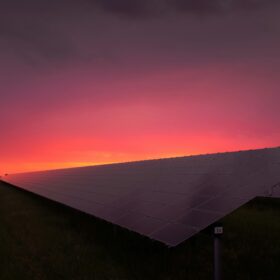
Renewables overbuilding, proactive curtailment can reduce Europe’s energy system costs
New research from the Netherlands showed that renewables and short-term storage can meet around 92.5% of Europe’s electricity demand in future energy scenarios, with the remaining 7.5% being satisfied by green hydrogen. The scientists considered Europe as fully self-sufficient with zero import-export of power or hydrogen, with each of the 37 countries included in the modeling having a self-sufficiency rate of at least 80%.
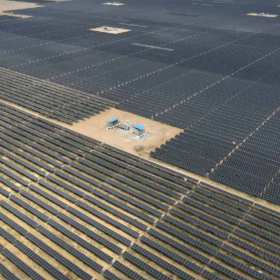
India on track to add more than 45 GW of solar in fiscal 2026
India installed 18 GW of solar in the first five months of fiscal 2026 and is projected to exceed 45 GW for the year, with rooftop and open-access systems driving growth alongside tax cuts and expanding manufacturing capacity.

Enhancing dual-axis solar tracker performance with new optimization techniques
Researchers in India have developed two solar tracker optimization techniques can purportedly increase power generation by up to 54.36% when combined. One uses a light sensor and the other relies on data from GPS and a real-time clock.

Gautam Solar unveils 630 W TOPCon module for utility-scale solar projects
Gautam Solar has introduced 630 W R-Series tunnel oxide passivated contact (TOPCon) modules for utility-scale PV projects, approved under India’s Approved List of Models and Manufacturers (ALMM) and Bureau of Indian Standards (BIS).
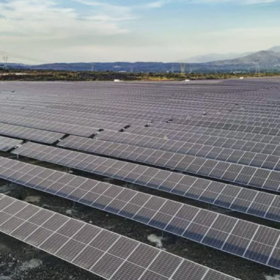
Banks fund $65 million for 100 MW solar project in Turkey
The Asian Infrastructure Investment Bank (AIIB) and Industrial Development Bank of Turkey (TSKB) have each contributed $32.5 million toward a senior debt financing package for a 100 MW solar project in southern Turkey.

‘Preaching to the unconverted’ – EUPVSEC 2025 kicks off in Bilbao
The annual European Photovoltaic Solar Energy Conference (EU PVSEC) got underway today, this year in Bilbao. Conversations on the first morning focused on the need for strong policy support across multiple areas of renewable energy. While the week is sure to be filled with new ideas on the technological side, it’s clear that ensuring policies to support further growth in renewable energy is a growing challenge. Those working in the solar industry and research community need to reach a wider audience, and one that may not be as easy to convince.

Iraq inaugurates first phase of largest solar plant to date
The first phase of the Karbala solar power plant, totaling 22 MW, is now online. Its capacity is expected to reach 75 MW within the next two moves, ahead of a final 300 MW target.

Optimum tilt angle for PV systems ranging from 0° to 90°
A Slovak research team has developed a mathematical model for determining the optimum tilt angle of a solar system ranging from 0° to 90°. Their framework was tested on an experimental setup in Czechia and attained 93.9% accuracy in predicting the system’s energy balance.

EBRD to support solar, storage, wind tenders in Jordan
The European Bank for Reconstruction and Development (EBRD) is working with Jordanian authorities to support three renewable energy tenders in the country, including a 200 MW solar project and a 100 MWh storage project.

Brookfield, Solarvest partner on 1.5 GW of solar-plus-storage in Malaysia
The two parties have signed a joint investment framework agreement to develop, construct and operate 1.5 GW worth of solar-plus-storage projects in Malaysia over the next three to five years.
