
Iraq slashes solar import tariffs to 5%
The Iraqi Customs Authority has cut customs duties on solar energy systems from 33% to 5% – covering PV panels, inverters, cables, and lithium batteries – to accelerate solar adoption, following financing support from the Central Bank of Iraq.
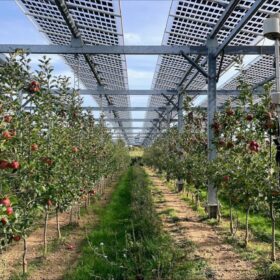
New solar tracking strategies aim to maximize crop yield in agrivoltaics
Swedish researchers developed two novel single-axis solar tracking strategies that dynamically adjust panel tilt based on crop light requirements, balancing photosynthesis and energy production. One strategy prioritizes daily light integral targets before shifting to energy capture, while the other uses the light-response curve to optimize photosynthesis, offering improved dual-use efficiency compared with conventional tracking methods.

Agrivoltaics? Yes in my vineyard
Researchers in Spain surveyed 238 wine tourists in the Murcia region and found broad support for trellis-integrated agrivoltaics in vineyards, with 94% backing solar integration and most respondents seeing no landscape conflict.
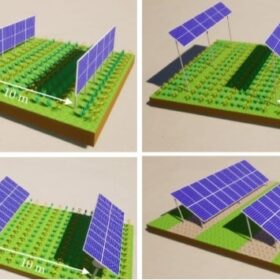
All agrivoltaic cropping systems at a glance
An international research team reviewed agrivoltaic systems, highlighting challenges in design, crop performance, and PV efficiency, while mapping their global potential. They call for innovative layouts, targeted crop selection, and improved modeling to maximize energy yield and land-use efficiency.

The impact of agrivoltaics on potato farming
New research from Italy has shown that agrivoltaic systems can reduce potato yield by up to 15% compared to full-light cropping. However, moderate early-season shading was found to delay soil-moisture depletion, extending biomass accumulation and improving water-use efficiency.
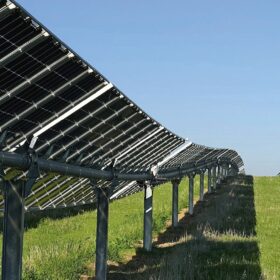
NextPower leads Wood Mackenzie tracker rankings as US, China dominate
Wood Mackenzie ranked NextPower as the world’s top PV tracker manufacturer in the first half of 2025, with companies headquartered in the United States, China and Spain occupying all top 10 positions.
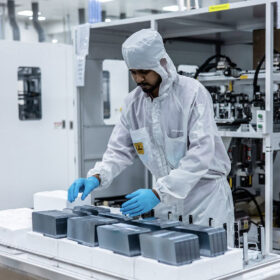
Vietnam more cost-competitive than India in cell, PV module production, says IRENA
IRENA’s latest report finds that energy use and material intensity across the solar PV manufacturing supply chain will decline through 2030. The analysis also shows Vietnam remains more cost-competitive than India due to lower electricity prices, while high energy and labour costs keep Australia and Germany less competitive.

U.S.-India trade deal reduces solar tariffs
Tariff reductions under the new U.S.-India trade agreement lower import costs for solar modules and energy storage components. Reciprocal tariffs were effectively reduced from 50% to 18%.
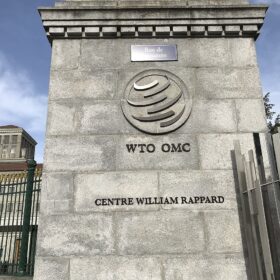
WTO finds US clean energy tax credits violate trade rules
The WTO ruled that U.S. clean energy tax credits under the Inflation Reduction Act violate international trade rules by giving domestic products preferential treatment over Chinese goods. The decision specifically targets the ITC and PTC Domestic Content Bonus Credits.
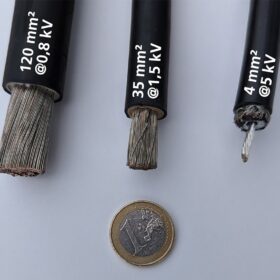
Fraunhofer ISE developing world’s first medium-voltage solar plants
Germany’s Fraunhofer Institute for Solar Energy Systems (Fraunhofer ISE) is developing the world’s first medium-voltage PV plants in Germany to cut material use, reduce costs, and simplify grid integration. They will test 1,500 V and 3 kV string configurations to create cost-effective, voltage-resistant components for large-scale solar.
