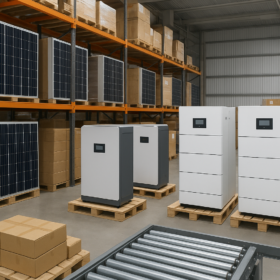
S&P Global unveils 2025 Tier 1 module, inverter, battery supplier list
S&P Global’s first 2025 Tier 1 Cleantech Companies list ranks 63 solar, wind, inverter, and battery suppliers by technology, financial health, and sustainability to guide investors and developers.
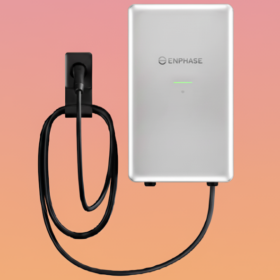
Enphase presents bidirectional EV charger
The microinverter company has disclosed details on the architecture of its IQ Bidirectional EV Charger, which will be available for sale in the second half of 2026. It is reportedly able to deliver up to 11.5 kW of bidirectional power.
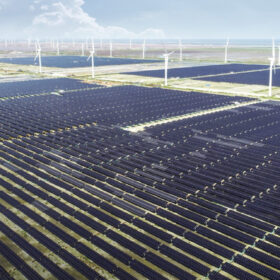
Sungrow unveils 4.8 MW modular inverter
Sungrow has introduced a 4.8 MW modular inverter and new utility-scale and commercial storage systems at the RE+ trade show in Las Vegas. The products include advanced grid-forming capabilities and efficiency improvements.
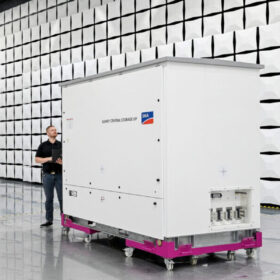
SMA secures German certificate for grid-forming battery inverter
SMA Solar Technology AG has obtained the first German unit certificate for a grid-forming battery inverter with instantaneous reserve. The certification allows use in high- and extra-high-voltage projects ahead of the new reserve market in 2026.

Czech cybersecurity agency warns against Chinese solar inverters
Czechia’s cybersecurity office said Chinese solar inverters in small power plants are a potential security threat. The Czech solar association told pv magazine work needs to be done on incentivizing European manufacturing to resolve the reliance on imports.

Novel MPPT methodology uses grey wolf hunting as inspiration
Researchers have developed a maximum power point tracking algorithm based on the social hierarchy and hunting strategy of grey wolves. When tested under realistic shading conditions, the grey wolf optimizer achieved an average MPPT efficiency of 98.15%, significantly outperforming conventional MPPT methods.

The Cybersecurity gap in solar and how to close it
In recent months, solar energy has been recognised by the EU Commission as critical grid infrastructure, with a growing awareness around cybersecurity in particular raising questions about Europe’s energy security. In this article, solar cybersecurity specialist Uri Sadot – Managing Director at SolarDefend and Elected Chairman of SolarPower Europe’s Digitalization Group – discusses what PV installers, developers, EPCs and system owners can do to better protect themselves – and the grid.

Fraunhofer ISE defining test procedure for grid-forming inverters
The evaluation process, developed in collaboration with four German transmission system operators, has been carried out on seven European companies whose inverters range from kW to MW in size.

New deep learning tech for PV inverter fault diagnosis
A team of scientists in the United States has combined both spatial and temporal attention mechanisms to develop a new approach for PV inverter fault detection. Training the new method on a dataset created in MATLAB/Simulink, the group has compared it to a series of other data-driven and statistical-based methods and has found accuracy reached 97.35%.
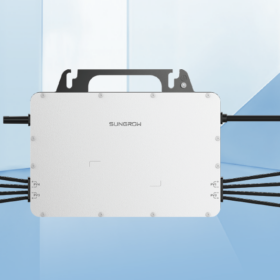
Sungrow debuts 2.5 kW microinverter
The Chinese company said its new microinverter supports four independent MPPT inputs with DC input currents up to 18 A.
