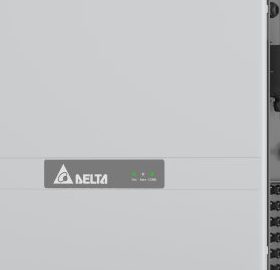
Delta launches new string inverter
The Taiwanese manufacturer said the 77 kVA, three-phase device is ideal for solar parks and commercial rooftops. The inverter, which has six maximum power point trackers, is said to have an efficiency of 98.8%.
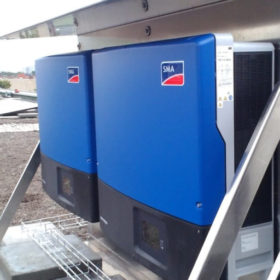
SMA: Sustainability and profitability are not mutually exclusive
In the run up to our Greenwashing vs. verifiable sustainability webinar, the CEO of pv magazine’s UP initiative partner SMA Solar Technology, Jürgen Reinert, talks about what the inverter manufacturer is doing to prove its sustainability credentials.
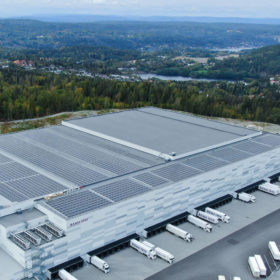
Supermarket rooftop brings commercial solar – and silicon carbide inverters – to Norway
The sizeable rooftop array will feature latest-generation inverters. The project planners claim using 1500 V technology on a commercial rooftop allowed them to drive down costs 10-15%.
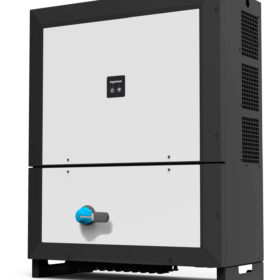
Ingeteam unveils new 1500 V string inverter
The Spanish manufacturer said the new three-phase device may reach a power output of 160 kWac in a single 75kg unit. The inverter features 1500 Vdc technology and is said to be able to reach a power output of 161 kW (AC) in a single 75kg unit.

Huawei facing another three Solaredge lawsuits
Inverter manufacturer Solaredge has filed three additional patent infringement lawsuits against its competitor, Huawei, in China. This comes after three similar legal actions against Huawei that had been undertaken by Solaredge in Germany last summer. While Huawei has decided not to comment on the matter, the Chinese manufacturer revealed that it had filed three patent litigation claims against Solaredge at a Chinese court this May.
Solaredge launches smart modules with integrated power optimizer in Europe
For its new offer, the Israeli inverter maker is using modules provided by a Tier 1 manufacturer. The products have a 12-year warranty and 25-year performance guarantee.
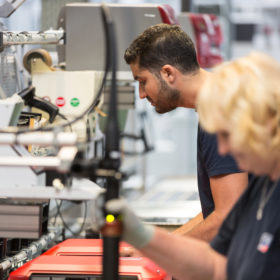
SMA: ‘We can’t be credible if we’re not sustainable’
Credibility comes not just from offering products that generate clean electricity, but also from the way in which those products are manufactured, says SMA Solar Technology CEO Jürgen Reinert. Here, transparency and sustainability are key. That’s why one of the world’s largest PV inverter producers has partnered with pv magazine’s UP sustainability initiative. In the following Q&A, Reinert lays out what SMA is doing to step UP its green game.
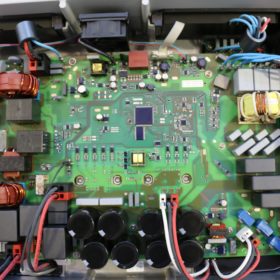
The weekend read: Inverter issues
PVEL’s inaugural inverter scorecard is showing up the need for much more scrutiny on the reliability of inverters. But are developers and EPCs even paying attention?
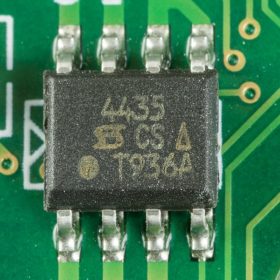
Swiss scientists identify causes of defects in silicon carbides for power electronics
Carbon clusters of a few nanometers in size could be responsible for the defects affecting the thermal stability of SiCs. The defective carbon accumulations arise during the oxidation of silicon carbide to silicon dioxide under high temperatures.
ABB and Fimer respond to UK criticism of products and customer service
The inverter businesses have responded to the letter published by the UK Solar Trade Association which was critical of the former’s products and customer service record.
