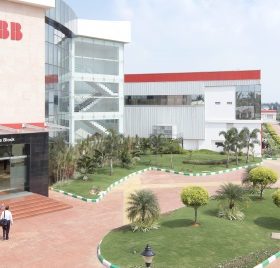
ABB called out by UK Solar Trade Association over quality and customer support
The STA has warned Italian company Fimer, which is set to acquire Swiss company ABB’s inverter business, it will have to honor customer service commitments made to its British members, and voiced fears related to historic quality issues with ABB inverters.

Trump ratchets up tariffs on Chinese products – including batteries
While the damage is largely done for cells, modules and inverters, increased tariffs on U.S. module components and 15% measures on lithium-ion batteries are not good news for either sector.

Solar world pays tribute to founding father of SolarEdge
A tribute to Guy Sella has hailed ‘a brilliant man’ and ‘a revolutionary trailblazer’ who was ‘vibrant and energetic’ yet ‘down-to-earth and approachable’.
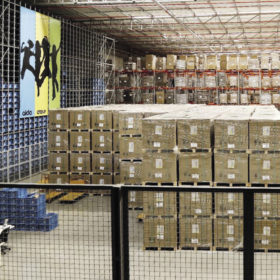
Brazil’s faltering manufacturing ambition
A binational integrated solar industry project, announced just over a year ago, aims to build a vertically integrated solar manufacturing industry along the border between Brazil and Paraguay. But the project is now on hold pending an update and reassessment by its new managers.

PV system prices fell 8.9% in Brazil in the first six months of the year
The cumulative capacity of 5 MW-or-smaller solar systems has reached 958 MW in Brazil, according to consultancy Greener. Around a third of that capacity was installed in the first half of this year, with projects relying on half-cell and PERC modules making up the largest share.
SMA reports losses for first half of 2019
For the second half of the year the German inverter producer expects a significant increase in revenues and earnings, mainly due to high order intake. It also confirmed its forecast for the full fiscal year, despite declining sales and earnings in the first six months of 2019.
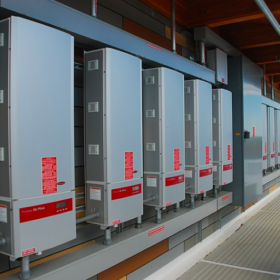
Wood Mackenzie expects more consolidation in inverter business
The research firm says the value of the global inverter market will continue to decline until 2024, even though shipments will likely increase. China’s recent policy changes have increased pressure on prices, which will contribute to greater consolidation in the sector.
Indian government invites solar research proposals
The MNRE has invited proposals for high-efficiency perovskite solar cells, solar panel recycling, hybrid inverters and new applications that combine solar and storage, among others.

SolarEdge posts strong revenue increase, slight drop in net profit
The Israeli inverter manufacturer saw its net profit decline 4% year-on-year to $33.1 million in the second quarter, despite shipping 1.3 GW and seeing a 43% increase in turnover. Gross margins were affected by the increase in U.S. tariffs on China made products.
Chinese investment in renewables soars under Belt & Road initiative
A report by Greenpeace has found in the five years since China announced the continent spanning ‘One Belt, One Road’ infrastructure plan, investment in Belt & Road countries has supported 12.6 GW of wind and solar power generation capacity. That compares with just 450 MW which came online in the territories before 2014. The initiative has also supported 68 GW of new coal capacity.
