
Tongwei unveils 770 W TOPCon PV module with 24.8% efficiency
The Chinese manufacturer unveiled its new TOPCon bifacial TNC3.0 module at WFES 2025. The 1,500 V, IP68-rated panel offers over 85% bifaciality, a 0.26%/C temperature coefficient, and a 30-year warranty guaranteeing 88.85% output.
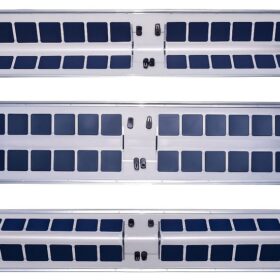
Mirai Solar develops lightweight solar panel for agrivoltaics
While completing pilot projects in the U.S. and Europe, Mirai Solar has certified its lightweight PV module designed to work as a shade screen in agrivoltaics applications, such as greenhouses.

Solar module prices lagging behind soaring silver costs
Solar manufacturers are facing rising cost pressure as silver paste now accounts for up to 30% of total cell production costs. OPIS analyst Hanwei Wu tells pv magazine that module producers currently have limited ability to raise panel final prices, which is accelerating efforts to reduce silver use across all mainstream cell technologies.
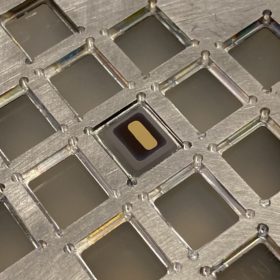
Chinese scientists push selenium solar cells beyond 10% efficiency
Researchers at the Chinese Academy of Sciences have set a world record for selenium solar cells, achieving 10.3% efficiency for the first time above the 10% threshold. The breakthrough was enabled by optimized charge-selective contacts, light-driven crystallization, and post-deposition annealing, producing stable devices with a 1.03 V open-circuit voltage.
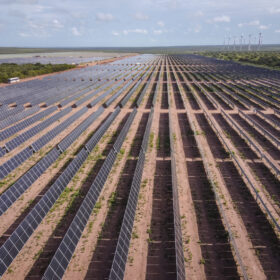
Capex-driven strategies can reduce solar LCOE by 20%
An international research group has conducted a literature review of capital expenditure-driven levelized cost of electricity optimization strategies for utility-scale PV systems. Tracking optimization, system voltage escalation, and advanced system design are identified as the most promising cost reduction areas. “The next wave of PV research must be LCOE-native, system-level, and deployment-validated,” a member of the research group said.

RenewSys launches reel-format sheet encapsulants for junction box, busbar insulation in solar modules
The Indian PV manufacturer has launched Conserv Augmensheet, a sheet encapsulant for insulation and sealing of busbar and junction box areas in solar modules. Supplied in reel format, the product supports automatic feed-in on fully automated module manufacturing lines, reportedly enabling higher productivity and consistent processing for solar module production.

Solar module efficiency could exceed 35% by 2050
A new Perspectives research study on the future of the global PV supply chain outlines how module prices, performance, and lifetimes could evolve over the next 25 years. The work reflects a collaboration among leading solar research institutions worldwide. One of the study’s authors, the director of the Fraunhofer Institute for Solar Energy Systems (ISE), told pv magazine that solar module and cell efficiencies could exceed 35% by 2050, with panel prices expected to drop by a factor of two.
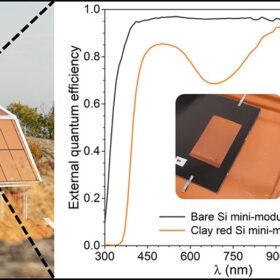
Danish researchers develop color-tunable BIPV foil
The use of a novel roll-to-roll process and optimization technology resulted in polymer foils for use in colored PV modules in a potentially wide range of colors with low iridescence and low levels of efficiency loss.

China to abolish solar export tax rebates in April
China will scrap value-added tax export rebates for PV products from April 1, 2026, while cutting battery rebates ahead of a full phaseout, raising export costs for manufacturers and potentially pulling shipments forward into early 2026.

How to avoid ‘long tail’ effects in large-scale PV plants
New UNSW research found that about 20% of solar modules in large PV plants degrade much faster than expected. They recommend holistic strategies such as robust materials, advanced designs, and proactive monitoring to decouple degradation pathways and prevent cascading failures.
