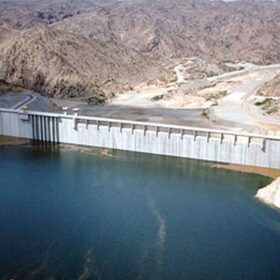
Floating solar could reach LCOE of $0.053/kWh in Saudi Arabia
Scientists in Saudi Arabia have assessed the techno-economical feasibility of floating PV plants at three different dams and have found that such projects could have a return on investment of 12 to 13 years.

‘Oversupply is still there’
At the World Future Energy Summit in Abu Dhabi, pv magazine spoke with two OPIS analysts about the current and projected price trajectory in the global supply chain. According to their analysis, overcapacity remains difficult to be kept in control, which makes an increase in solar module prices very unlikely, at least in the near future.
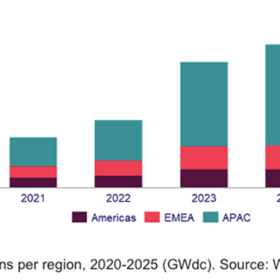
Wood Mackenzie predicts solar growth will stagnate in 2025
Wood Mackenzie’s latest report forecasts that 493 GW (DC) of solar will be added throughout the world this year, compared to 495 GW in 2024. Solar module prices are expected to rise this year as manufacturers aim to recover profit losses from the past two years.
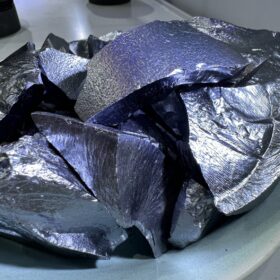
GCL cuts granular silicon production costs by 15%
GCL Technology cut granular silicon production costs by 15% to CNY 28.17 ($3.87)/kg in the fourth quarter of 2024, down from CNY 33.18 in the previous quarter.
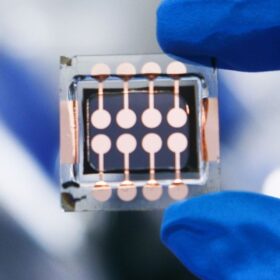
All-perovskite tandem solar cell based on wide bandgap perovskite achieves 29.1% efficiency
An international team researching wide bandgap perovskite films announced an effective technique to control the crystal orientation without compromising charge transport. The new approach was demonstrated in an all-perovskite tandem solar cell with an open-circuit voltage of 2.21 V and certified power conversion efficiency of 29.1%,

Where does solar stand in Trump’s ‘all the above’ energy policy?
Wind and electric vehicles have come under the crosshairs for the Trump administration, while solar has been relatively unscathed – so far.
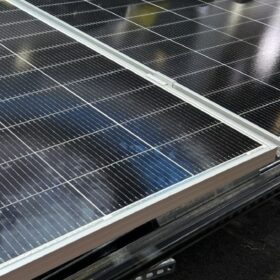
JinkoSolar takes top spot on WoodMac’s list of PV module manufacturers
Wood Mackenzie says that JinkoSolar has taken first place on its list of solar panel manufacturers. The report confirms the dominance of the TOPCon technology but also notes that heterojunction and back contact panel manufacturers are increasing their production share.
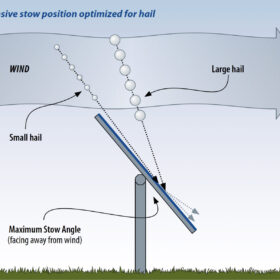
Actionable insights to safeguard solar projects from hail damage
The second article in a two-part series from VDE Americas looks at hail risk mitigation measures that continue advancing through improved materials, prediction capabilities and refined stow strategies.
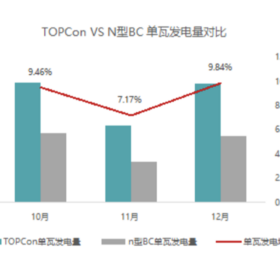
JinkoSolar’s TOPCon modules offer 8.82% yield gain in Japan field test
JinkoSolar’s latest n-type tunnel oxide passivated contact (TOPCon) modules delivered higher energy yield per watt than a competitor’s n-type back contact (BC) modules in a three-month field test in Kagoshima, Japan, under varying irradiance levels.
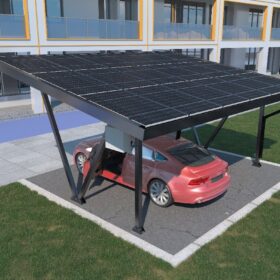
Mibet launches waterproof solar carport
The Chinese company said that its new product has a drainage edge that ensures complete waterproofing. It can purportedly withstand wind speeds of 45 m/s and a snow load of 1 KN/m².
