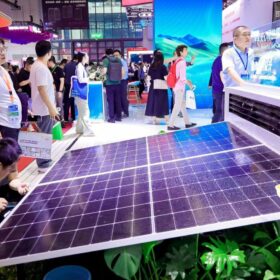
France’s Carbon involved in patent case with JA Solar
France-based PV manufacturer Carbon is currently involved in patent proceedings with JA Solar over tunneling silicon oxide (SiO2) layers, doped polysilicon layers, and electrodes in tunnel oxide passivated contact (TOPCon) solar products.

PV fault detection method based on deep learning of aerial images
Conceived an international research group, the proposed model uses the convolutional neural network (CNN) architecture U-Net for image segmentation and the the CNN architecture InceptionV3-Net for fault classification.

Chinese PV Industry Brief: China Resources finalizes PV module tender
China Resources Power has finalized its 1 GW module procurement for 2024 with Astronergy, while China Power Construction has secured 1.5 GW of n-type heterojunction (HJT) modules through a separate tender.

Japan’s oldest PV system gets refurbished
Tokyo-based startup Girasol Energy and the enterprise bureau of Japan’s Yamanashi prefecture have repowered Japan’s oldest PV system, a 100 kW array built in 1993. The project aimed to partially replace the original 13.3% efficient solar modules, offering an alternative to dismantling and recycling the system’s components.
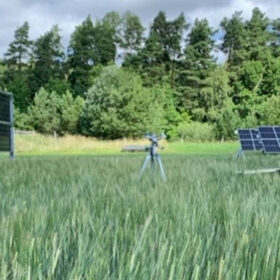
Vertical agrivoltaics for barley
Researchers in Sweden have measured barney yield in a vertical agrivoltaic facility and have found that despite the shade created by the modules the yields are comparable to open-field control conditions, if not slightly higher. Their methodology can be replicated for other sites and crops.
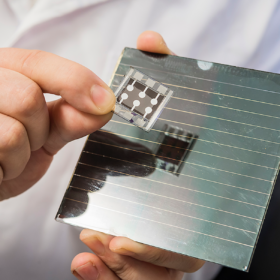
Perovskite solar cell achieves higher stability with new tin oxide layer
Using atomic layer deposition, a research team from the City University of Hong Kong has created an an oxygen-deficient tin oxide layer to replace the more common fullerene electron transport layer in perovskite solar cells. The result is a 25%-efficient device that is able to retain around 95% of its efficiency after 2,000 h.

Gautam Solar plans IPO
Gautam Solar plans to launch an initial public offering (IPO) in the next 12 to 18 months to fund its PV cell expansion plans.
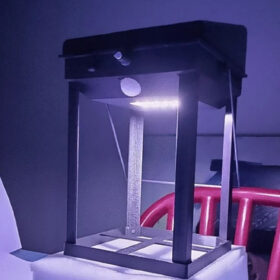
PV-driven lighting solution for rural areas
Scientists have created a lighting system based on the AEM10941 solar harvester developed by Belgium-based E-peas. The system is reportedly able to provide a full brightness run time of 10 hours.

Australian scientists make new discovery that could boost solar cell performance
Researchers in Western Australia have discovered a method to increase the number of molecules that adhere to the surface of tiny semiconductor nanocrystals. They claim this breakthrough could significantly enhance the efficiency and performance of solar panels.
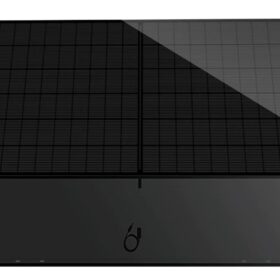
Gstar introduces 440 W TOPCon solar module with framless design
The Singapore-based manufacturer said its new panel can achieve self-cleaning through rainwater thanks to its frameless design. The new product features an operating temperature coefficient of -0.30% per C and an efficiency ranging from 21.51% to 22.53%.
