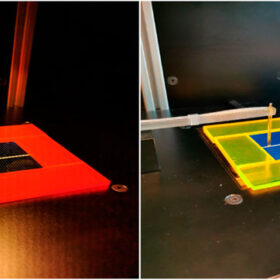
Improving solar cell performance with dye concentrators
Scientists in Poland have sought for the first time to improve PV cell yield with a new type of concentrator based on dyes. The device utilizes a tinted and luminescent acrylic glass known as polymethyl methacrylate, which reportedly increases power generation by 1.21%.

Dual-axis solar tracker based on UV, MEMS sensors
Researchers have designed a new tracking system that utilizes an arithmetic optimization-based PID controller. The proposed tracker uses two different sensor types – a UV sensor and a micro-electromechanical solar (MEMS) sensor. The first one calculates the intensity of UV radiation received from the sun, and the second one forecasts the sun’s path across the sky.

JA Solar sues rival module manufacturer over TOPCon patent infringement
The Shanghai-based solar development company has filed two complaints with the Munich and Hamburg local divisions of the Unified Patent Court.

New discovery paves the way for more efficient perovskite solar cells
Researchers from University of Texas have used computational methods to study the formation of polarons in halide perovskites. The findings revealed topological vortices in polaron quasiparticles.
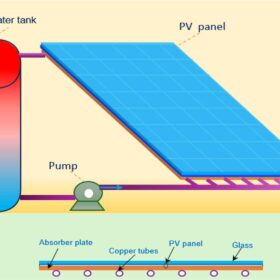
Hydronic closed-loop cooling system for photovoltaic modules
An international research team has developed a closed-loop PV cooling system that can reportedly offer 24-hour continuous operation. The system is claimed to be particularly suitable for hot and arid regions and to improve the lifespan of solar panels by up to 8.2%.
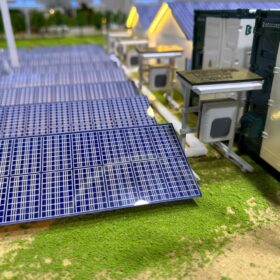
Quantum algorithm for photovoltaic maximum power point tracking
Researchers have developed a quantum particle swarm optimization algorithm for maximum power point tracking that reportedly generates 3.33% more power in higher temperature tests and 0.89% more power in partial shading tests compared to conventional swarm optimization algorithms.
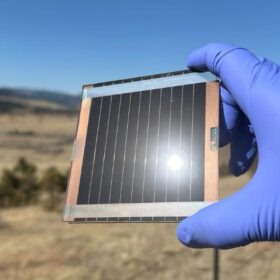
U.S. startup develops 28%-efficient perovskite-silicon tandem solar module
U.S.-based PeroNova is specialized in metal halide perovskite-silicon tandem solar cells made with its novel stability-enhancing interfacial treatment. It is targeting a range of applications including space and rooftop markets.
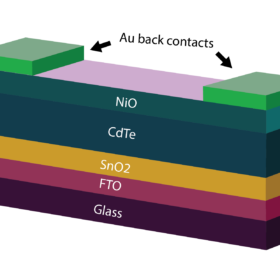
Increasing voltage in cadmium telluride solar cells through nickel oxide back buffer layer
Cadmium telluride solar cells are commonly based on non-ohmic back contacts that affect the device open-circuit voltage. Researchers in the United Kingdom sought to address this issue by adding a nickel oxide back buffer layer, which formed an ohmic back contact and increased open-circuit voltage levels.
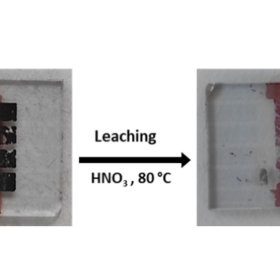
Recovering silver from PV waste via green graphene
Researchers at James Cook University have developed a process to synthesize graphene from tangerine peel oil, which they then used to recover silver from waste PV material. To demonstrate the quality of the recovered silver and the synthesized graphene, they made a dopamine sensor that reportedly outperformed reference devices.

Q-Sun Solar, Bakarat Investment to build 10 GW solar panel factory in Oman
The China-based solar manufacturer and Oman’s renewable investment entity Bakarat Investment have agreed to jointly establish a 10 GW solar module factory in the country with an investment of around $200 million.
