
The effects of solar module elevation on ground-mounted PV
Scientists in Hungary found that ground-mounted PV modules at an intermediate elevation of 1.1 m achieve the highest efficiency and power output due to improved airflow and reduced cell temperature. Their study also estimated a levelized cost of electricity of $0.0843/kWh and 577.78 kg CO₂ mitigation over 25 years, while noting results are specific to concrete surfaces.

AI can now predict solar cell efficiency from wafer quality
Korea University researchers have developed a machine-learning framework that predicts solar cell efficiency from wafer quality, enabling early wafer screening and optimized production paths. Using over 100,000 industrial data points, the approach combines predictive modeling, process optimization, and explainable AI to support photovoltaic manufacturing.
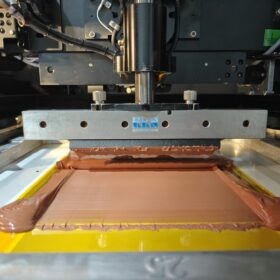
Bert Thin Films launches copper paste for backside solar cell metallization
The U.S. startup has introduced a screen-printable copper paste for backside solar cell metallization that can be fired in air and co-fired with standard silver frontside pastes using conventional manufacturing processes. Tested on TOPCon cells, the paste contributed to achieve a 25% efficiency and passed 2,000-hour damp heat testing.

Centrotherm launches new high-volume TOPCon PECVD tool
The Germany-based PV thermal process equipment and technology provider has launched c.Plasma Q Max to process up to 10,000 wafers per hour in high-volume TOPCon solar cell manufacturing lines.
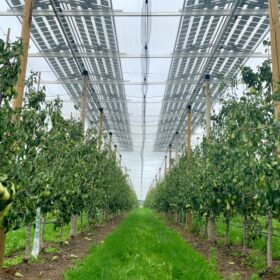
Long-term trade-offs of agrivoltaics on pear farming
A four-year study found that overhead solar panels in an Australian pear orchard reduced sun and hail damage but decreased fruit yield and blush coloration. While energy production and tree stress resilience improved, the findings highlight trade-offs for agrivoltaic systems, with potential applicability to other fruit crops like apples and cherries.
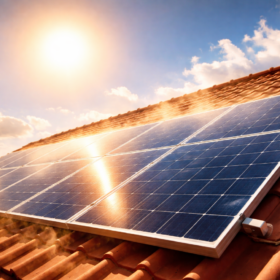
Global-warming-induced degradation could raise rooftop solar LCOE by up to 20%
A global study finds climate change will sharply increase high-temperature risks, accelerate degradation, and raise costs for rooftop PV, with economically disadvantaged regions hit hardest. Researchers warn current IEC standards underestimate future risks, urging urgent updates to avoid stranded assets and rising electricity costs.
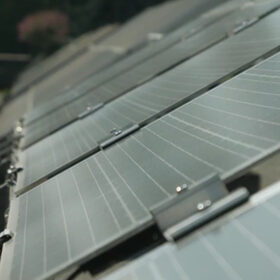
One-year perovskite solar module testing shows promising outdoor stability
Scientists at the European Commission Joint Research Centre tested two single-junction perovskite modules outdoors for one year and reported overall stable performance, supported by a new light-soaking preconditioning method to improve measurement reliability. While one module degraded significantly, the other maintained relatively stable efficiency with seasonal variations, highlighting the need for longer-term outdoor studies.
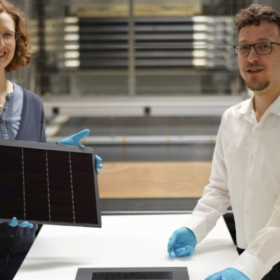
Fraunhofer ISE achieves 34.2% efficiency with III-V germanium PV module
Fraunhofer scientists have announced two efficiency records for III-V tandem modules. The team says its 34.2% efficiency III-V germanium PV module is the most efficient solar module in the world, while its 31.3% efficiency III-V silicon PV module is a record in its class.
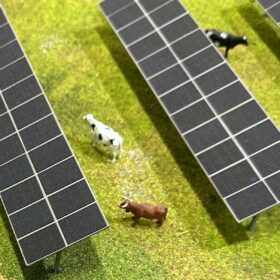
The impact of agrivoltaics on soil properties
New research shows how agrivoltaic systems can reshape soil by altering moisture, temperature, and microbial activity, creating heterogeneous zones under and between panels. Proper design and management can boost soil health and crop resilience, especially in degraded or arid regions, though long-term effects remain uncertain.

What happens when type-C cracks strike photovoltaic modules
An international research team used high-resolution electroluminescence imaging to quantify type-C cracks in 100 PV modules after 11 years of operation, linking crack distribution to real-world power loss. Concentrated cracks within individual cells were found to cause disproportionately high losses, highlighting the importance of cell-level crack analysis for effective PV maintenance.
