
EC announces European Solar Charter to support PV manufacturing
The European Commission (EC) has proposed the European Solar Charter (ESC) in response to the challenges facing the continent’s solar manufacturing industry. The document sets out a series of voluntary actions to be undertaken to support the EU photovoltaic sector and bears no mention of EU trade tariffs or restrictions on cheap solar panel imports.
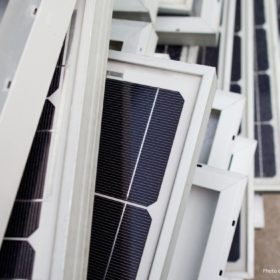
European study shows continent exports solar waste
Europe’s solar boom is hiding its waste through exports, according to a new study. Instead of recycling, as expected under European regulations, vast amounts of solar panel waste are exported, undermining sustainability goals. The researchers suggest a digitized value chain as a potential fix to work toward a circular economy.
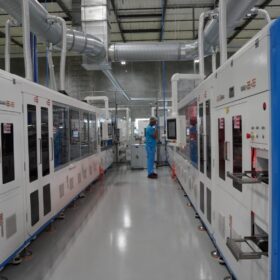
Turkish solar module manufacturer launches production in Texas
Elin Energy says it has an agreement with key US distributors and will begin with 1 GW of annual PV module production, with plans to increase to 2 GW within 18 months.
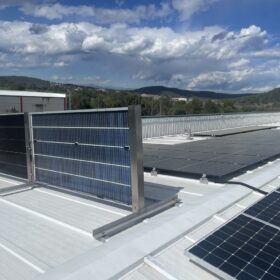
Spanish installer tests vertical rooftop PV array based on conventional panels
Sud Renovables has installed a pilot vertical rooftop PV system on one of its facilities in Barcelona, Spain. The array features two 500 W bifacial modules from US-based SunPower and two microinverters from Enphase Energy.
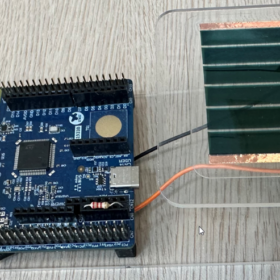
Dracula Technologies, STMicroelectronics unveil photovoltaic illuminometer
France’s indoor organic PV specialist Dracula Technologies and Swiss-headquartered semiconductor manufacturer STMicroelectronics demonstrated a battery-free illuminometer at the Embedded World trade fair in Germany last week.
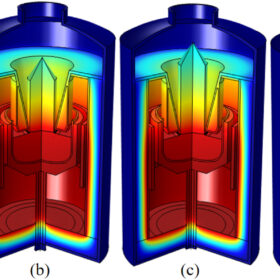
Adjusting oxygen distribution in Czochralski silicon crystal growth
Researchers in Taiwan have discovered that in polysilicon production the crucible angular speed affects the oxygen concentration near the crucible wall, which in turn affects the wafers’ mechanical and electrical properties. They simulated a Czochralski process for an ingot with a diameter of 200 mm diameter and a length of 700 mm.
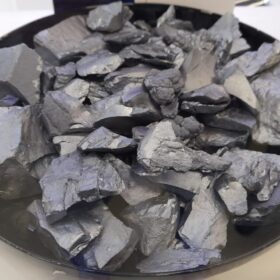
‘Polysilicon price will stay above $5.50/kg for at least a year,’ says analyst
Andries Wantenaar, solar analyst at Rethink Technology Research, tells pv magazine that high overcapacity levels in the polysilicon industry are exerting enormous pressure on prices for the entire supply chain. He says China hit 2.4 million tons of polysilicon production capacity at the end of 2023, and notes that the nation will end 2024 with 4 million tons of capacity if all announced production plans are realized.
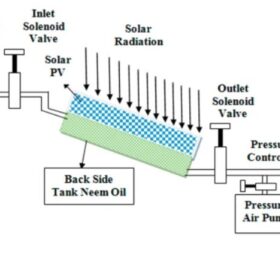
Solar module cooling tech based on waste neem oil
An international research team has placed a neem oil tank on the back of solar modules for cooling purposes. The proposed solution reportedly improves PV panel performance by up to 17.8%.
EU Ecodesign and Energy labels for solar risks fall short of objectives, says coalition
Representatives from the European Solar Manufacturing Council, Ultra Low Carbon Solar Alliance, PVthin, and the Environmental Coalition on Standards have proposed changes to the carbon footprint accountability methodology, the use of green certificates, and the planned design of the Energy Label for PV products.

How much polysilicon is enough
TU Delft researchers have proposed a new approach for solar cell manufacturing that implies gauging wafer thickness depending on the regions where the cells and modules will be deployed. They also suggested to adopt test conditions that are representative of the outdoor working condition of solar cells in an alternative to standard testing conditions.
