
Solar-hydrogen solution rolled out for off-grid settings
A new mobile power generator that combines solar and renewable hydrogen to provide zero-emissions power for remote and off-grid applications has been unveiled by Australian startup H2PowerBox.

Chinese PV Industry Brief: Tongwei, Canadian Solar, JA Solar report earnings
Tongwei, Canadian Solar, TCL Zhonghuan and JA Solar all reported significantly higher profits in 2023.
Global solar manufacturing sector now at 50% utilization rate, says IEA
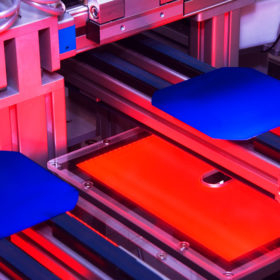
The International Energy Agency (IEA) says that global solar cell and module manufacturing capacity grew by around 550 GW in 2023. It reports that around 80% of the global PV manufacturing industry is currently concentrated in China, while India and the United States each hold a 5% share. Europe accounts for a mere 1%.

Sonnenkraft unveils 400 W TOPCon panel for terracotta red rooftops
Austrian manufacturer Sonnenkraft has developed a terracotta glass-glass module that aesthetically blends in with tiled roofs. It has an efficiency rating of 20.02%.
The impact of seasonal, meteorological factors on PV plant performance
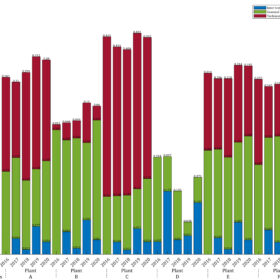
Scientists in Japan have investigated the impact of seasonal, metereological factors on solar plant performance and have found the average power generation inefficiency reached significant levels. The findings suggest that optimal site for power plants requires careful consideration of meteorological and geographical data.
Korean researchers build vertical solar panels with low reflection losses
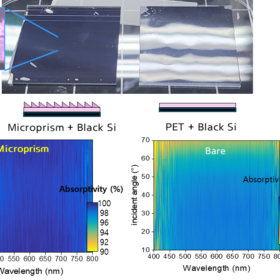
The modules are equipped with Maxeon solar cells and a microprism sheet that reportedly upholds a transmittance exceeding 99%. The microprism array is imprinted onto a PET sheet using the roll-to- roll embossing technique.
Three-step process to recover lead from end-of-life solar panels
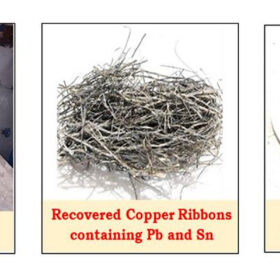
Researchers in India have developed a new solar module recycling process that transforms lead into less toxic lead monoxide. It consists of three main steps – leaching, precipitation, and calcination.
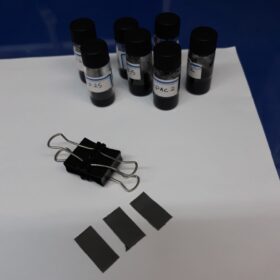
Improving perovskite solar cell performance with conductive adhesive ink
Conceived by researchers from Iran, the new conductive adhesive ink is made of polymethyl methacrylate (PMMA) and is used as an interlayer between the cell’s hole transport layer and carbon foil. It reportedly ensures higher cell stability while also providing remarkable efficiency.

Photovoltaics for vapor compression refrigeration
Scientists in China have developed a PV-driven direct-drive refrigeration system for electronic device cooling. The proposed system has so far provided low exergy levels, but its costs are much lower than those of conventional vapor compression refrigeration technologies.

Sinovoltaics updates financial stability ranking of PV module manufacturers
The latest Sinovoltaics financial stability report ranking lists Tainergy, Eterbright, First Solar, Era Solar, and TSEC as the top five module makers. There was a slight reshuffling in the top ten, and seven new manufacturers were added to the ranking.
