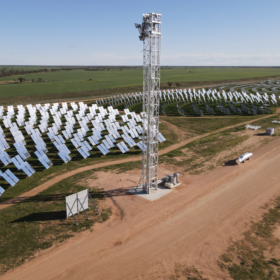
RayGen opens 4 MW ‘solar hydro’ plant in Australia
Australian energy tech startup RayGen has officially opened a 4 MW solar array and long-duration energy storage project in the state of Victoria. It describes it as the world’s “highest-efficiency PV project” operating at utility scale.
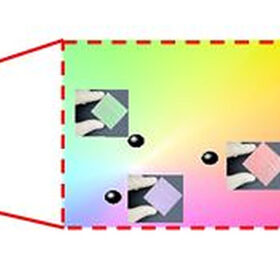
New techique to color flexible thin-film BIPV, VIPV panels
Researchers in South Korea have developed a process to enable colored and flexible, thin film modules suitable for vehicle and building-integrated PV applications. It is reportedly a low-cost process that does not significantly impact power conversion efficiency.

Powering sprinklers with PV, compressed air storage
A research group in China has proposed to solve the typical high working pressure issues of solar-powered sprinklers by using compressed air energy storage (CAES). According to their findings, combined PV-CAES sprinklers can easily achieve high pressure and low intensity high-quality water spraying.
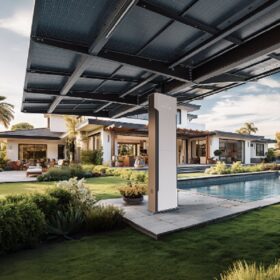
US startup unveils pre-assembled residential solar canopy
Nevada-based World4Solar has designed HelioWing, a modular solar canopy that comes preconfigured and can be installed in just one day.
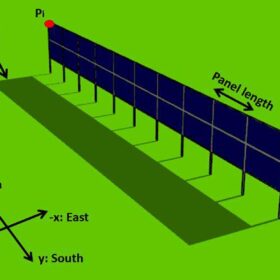
New model to assess effects of shading on crops in agrivoltaic projects
New research shows the importance of calculating the effects of shading created by PV panels on the photosynthetically active radiation (PAR) at the ground level, which is crucial to assessing crop yield in agrivoltaic projects. The proposed modeling considers different agrivoltaic project typologies across several sites in Europe.
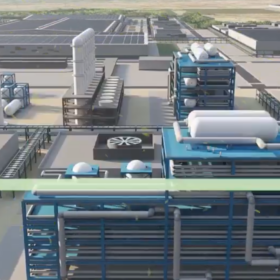
Reliance chairman outlines plans for HJT solar modules, sodium-ion batteries
Mukesh D Ambani, the chairman and managing director of Reliance Industries, says the company aims to open a fully integrated solar gigafactory by the end of 2025. It also plans to initiate megawatt-level sodium-ion cell production by 2025.
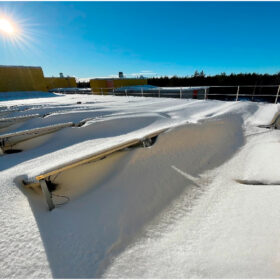
Scientists analyze seasonal performance of rooftop, vertical PV in the Arctic
New research from Finland shows that the best season for rooftop PV generation in the Arctic is spring, and that the best tilt angle for rooftop systems is 28 degrees. It also showed that vertical PV installations perform better in winter.
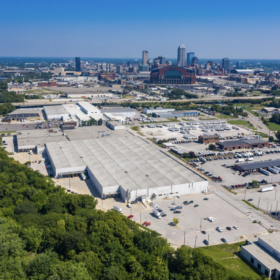
Bila Solar to make lightweight solar modules in US
Bila Solar – a Singapore-based developer of glassless, frameless PV modules – has announced plans to invest about $35 million to renovate a factory in Indianapolis, Indiana.
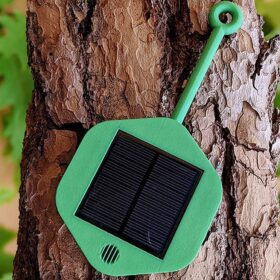
Solar for wildfire detection
Dryad Networks has developed an AI-powered sensor to detect wildfires and notify first responders.
PV cell technology trends
Ongoing innovation in PV cell technology will have major impacts as solar is deployed at a “multi-terawatt scale” over the next two decades, according to a global team of scientists.
