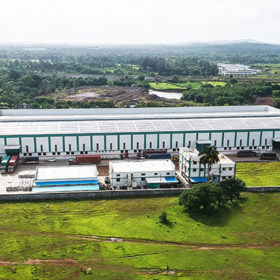
Waaree Energies raises $121 million to expand solar production
Waaree Energies says it will use the latest $121 million equity investment to build 6 GW of solar wafer-to-module manufacturing capacity.
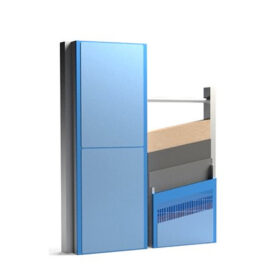
Novel BIPV material from South Korea
South Korean companies Posco and East-West Power are developing a new building-integrated solar photovoltaic solution. The new product uses special galvanized steel as the panel’s backside that Posco says lasts five to ten times longer than standard steel.

Chinese PV Industry Brief: Daqo, Longi note earnings impact of polysilicon prices
Daqo and Longi report that lower polysilicon prices have affected their earnings. Aiko Solar, meanwhile, has announced a 120% year-on-year increase in its net results for the first half, with shipments reaching 18.7 GW.
Quantum physics, supercomputers, and solar cell efficiency
Scientists in the United States applied quantum computing techniques to the study of singlet fission – a little understood phenomenon that carries the potential to greatly increase solar cell efficiency. For now, the study reveals more about potential applications for quantum computing than for solar cells. But the techniques demonstrated could eventually helps scientists identify better materials for highly efficient solar cells.
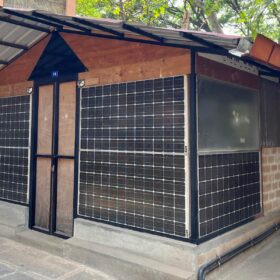
Using end-of-life photovoltaic panels as building material
Scientists in India have proposed to use solar modules at the end of their lifecycle as a building material for low-cost small housing units. With solar module recycling currently not viable economically, the researchers said their approach makes conventional solar panels into BIPV products without any modifications.

Radiation-hardened solar blankets to power orbital logistics vehicle
Solestial says its ultra-thin solar cells will power in-space delivery vehicles for Atomos Space.
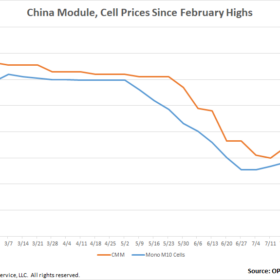
China module prices hold steady
In a new weekly update for pv magazine, OPIS, a Dow Jones company, provides a quick look at the main price trends in the global PV industry.
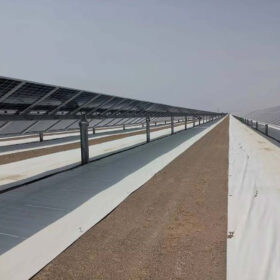
PVC knife-scratch coated fabric to increase albedo, energy yield in bifacial PV
China-based Halead is offering a reflective material for ground-mounted bifacial PV projects, which it claims can increase the annual power production of a solar plant by over 9%. Germany’s TÜV SÜD certified the performance of the solution.
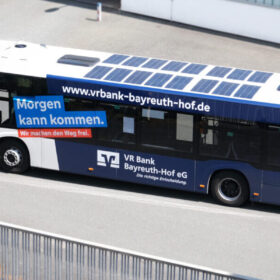
Sono Motors equips first bus with PV retrofit solution
Sono Motors has equipped its first bus with its PV retrofit solution, featuring 16 semi-flexible rooftop solar modules to feed 1.4 kW of output into the vehicle’s battery system.
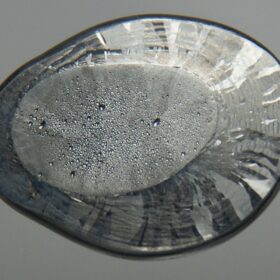
New technique to recover lead in end-of-life solar panels
A research group in the United States has developed a process to recover lead in its metallic form so that it can be reused in the PV industry. The process relies on a leaching solution based on a combination of acetic acid (CH3COOH) and hydrogen peroxide (H2O2), which the researchers said leaches the lead ‘in a matter of minutes.’
