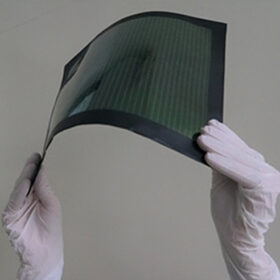
Toshiba claims 16.6% efficiency for polymer film-based large-area perovskite solar module
Japanese electronics giant, Toshiba, is continuing to improve the performance of its perovskite solar cell technology.

El Niño threatens US winter solar generation
In a new weekly update for pv magazine, Solcast, a DNV company, presents that El Niño will likely bring lower than normal solar power production through winter in the United States. Its analysis is based on data collected from previous El Niño events.
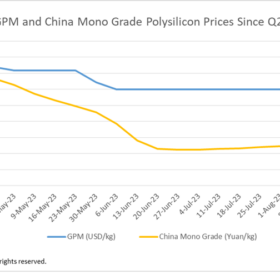
Global polysilicon prices drop, China polysilicon prices rise
In a new weekly update for pv magazine, OPIS, a Dow Jones company, provides a quick look at the main price trends in the global PV industry.
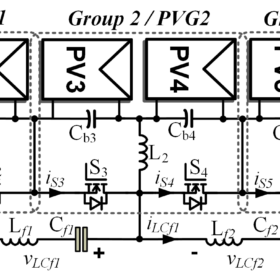
New DPP converter to improve yield in PV systems under permanent mismatch
Brazilian scientists have created a new hybrid converter topology based on differential power processing (DPP) that can help reduce power losses in PV systems under permanent mismatch conditions, as well as temporary ones caused by partial shading, dirt and snow. The converter consists of a hybrid topology that combines the PV-to-PV and PV-to-Bus architectures and reportedly solve some of the issues presented by both configurations.
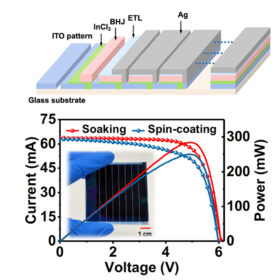
Organic cell based on HTL made of indium chloride layer achieves 18.92% efficiency
Scientists in China have fabricated an organic solar cell based on an indium tin oxide hole transport layer modified with an interfacial layer made of recycled indium chloride (InCl3).

Global sales of off-grid solar energy kits hit 9.5 million units in 2022
In 2022, off-grid solar kit sales reached a record-breaking 9.5 million units. This is almost 1 million more than the 8.5 million units sold in 2019.
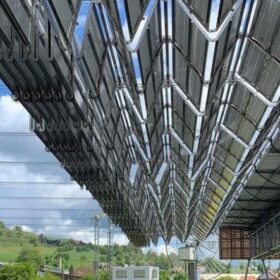
Foldable solar carport extends, retracts in response to weather
Switzerland’s Dhp Technology AG says it plans to deploy new retractable PV systems at 45 motorway service areas in the Swiss cantons of Valais and Bern. The foldable arrays can be retracted and protected during extreme weather conditions or hail storms.
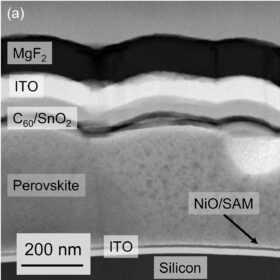
Monolithic perovskite-PERC tandem solar cell with 23.7% efficiency
Dutch scientists have developed a perovskite-PERC tandem solar cell based on a new type of tunnel recombination junction that reportedly offers an improved device efficiency distribution. The cell uses a nickel(II) oxide layer that is intended to reduce electrical shunts in the perovskite top cell.
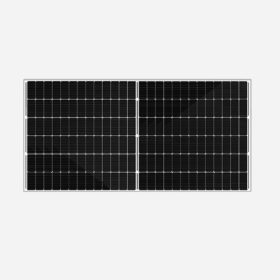
Navitas Solar sets up US manufacturing unit
Indian manufacturer Navitas Solar has collaborated with US-based Sustainable Equity and Colby Solar to set up a module factory with a manufacturing capacity of 1.2 GW per annum.
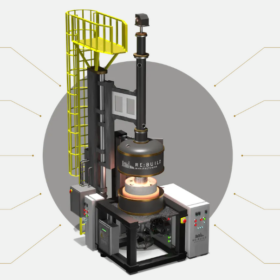
Re:Build Manufacturing introduces solar ingot processor
Massachusetts-based Re:Build Manufacturing has unveiled the RBM600 Solar CZ Puller, a solar ingot processor designed to manufacture high-purity polysilicon ingots for solar panels.
